

AI post-approval regulatory monitoring: how to stay ahead of lifecycle obligations
Approval is not the finish line. It is where the regulatory workload begins.
Labelling variations. REMS updates. Post-marketing commitments. PSURs. Regulatory intelligence monitoring across every authorised market. For a biotech with products in 30 or 40 countries, managing the post-approval regulatory landscape is a full-time operational challenge.
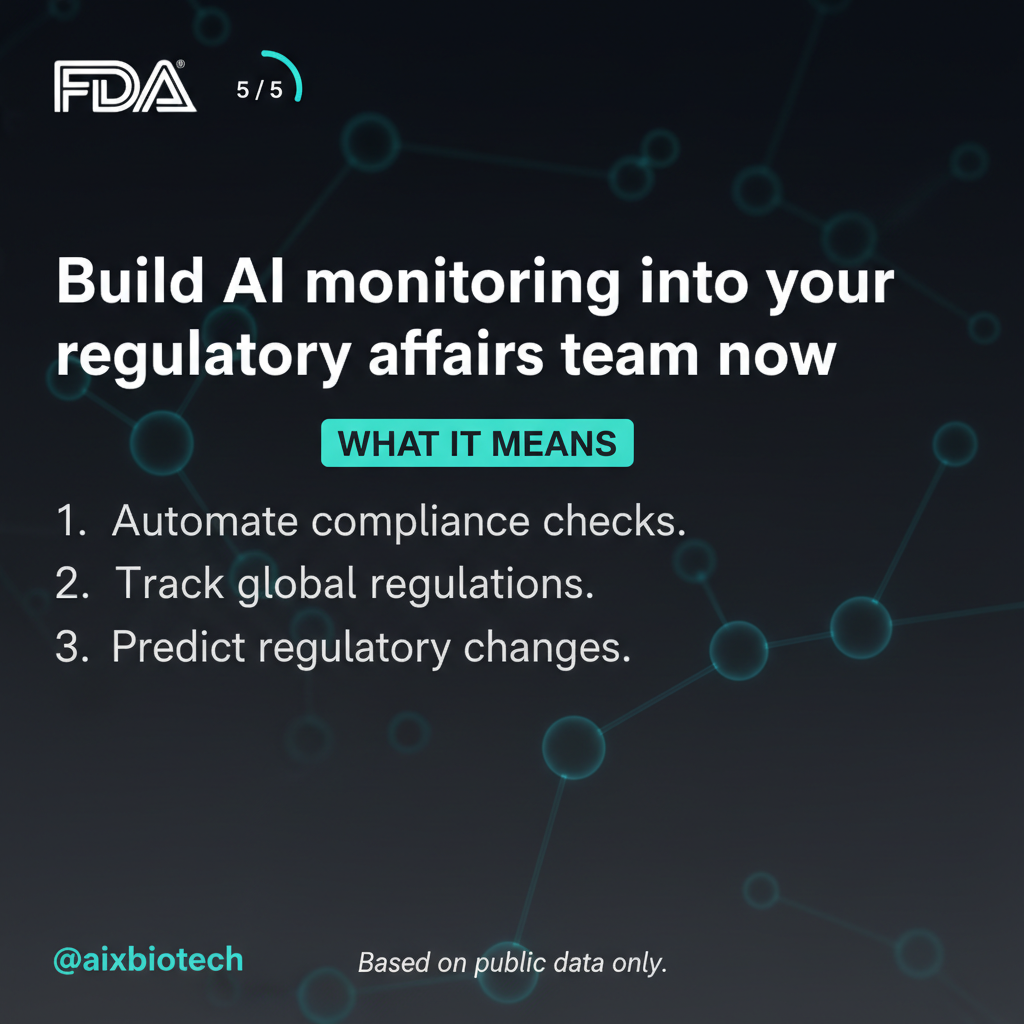
AI is helping regulatory affairs teams manage this complexity without proportionally scaling headcount. The tools are mature enough to deploy and the regulatory guidance around their use is clearer than it has ever been.
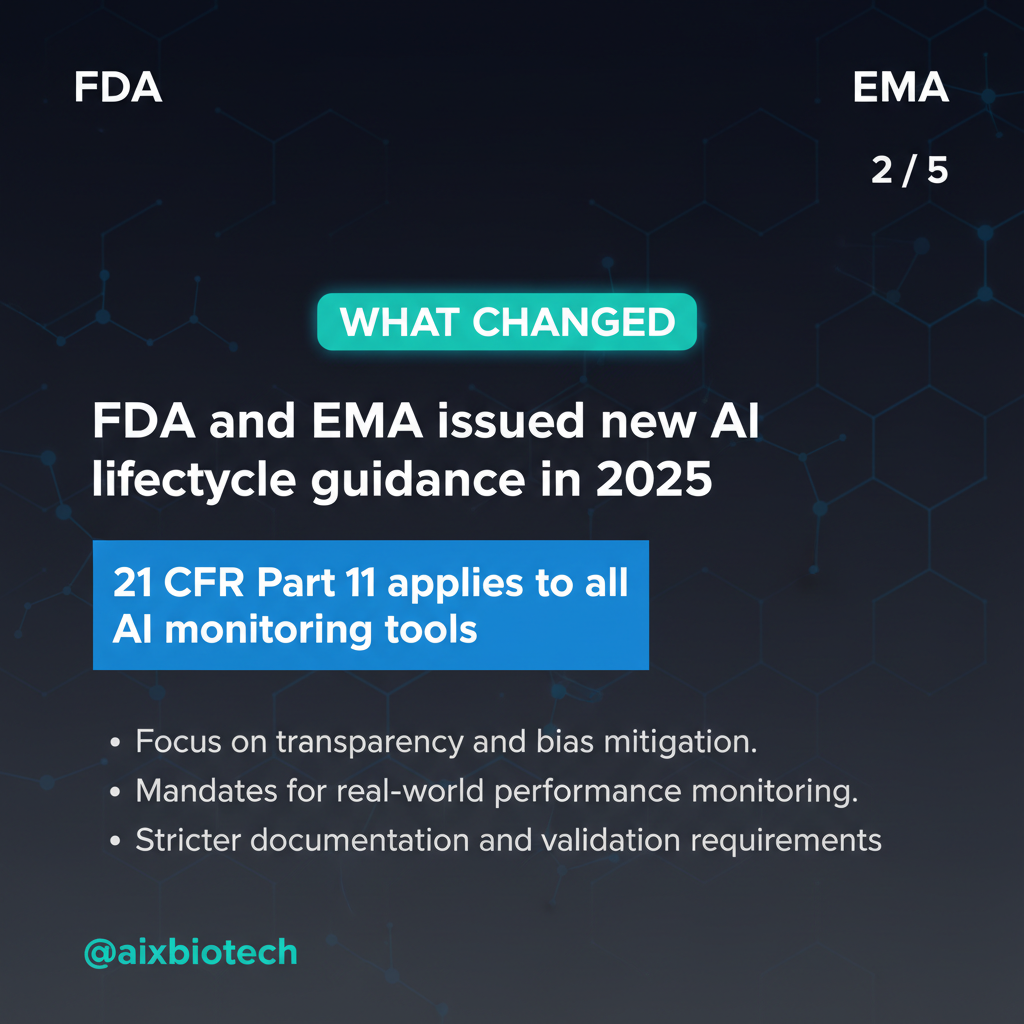
What changed in 2025
In January 2025, the FDA released its first draft guidance on AI in drug and biologic development. It was not a blanket endorsement of AI across all regulatory activities. It was a signal that the agency expects companies to document how AI tools are being used in regulated processes and to demonstrate that qualified human review is in place.
The EMA followed with updated lifecycle management guidance that referenced AI-assisted regulatory surveillance as an acceptable approach, provided validation and audit trail requirements are met under 21 CFR Part 11 and GxP standards.
Both signals point in the same direction. Regulators are not blocking AI use in post-approval regulatory management. They are defining what responsible use looks like.
What AI post-approval monitoring does
AI regulatory monitoring tools pull together regulatory intelligence feeds from the FDA, EMA, TGA, PMDA, Health Canada, and other major agencies. They parse guidance documents, public meeting minutes, labelling databases, and variation filing records. They surface obligations that are relevant to your specific products, in your specific authorised markets, before they become deficiencies.
Key stat: Teams using AI regulatory monitoring tools are reducing the time between a regulatory change and an internal response by 60 to 70%. Source: IQVIA and Veeva Vault RIM deployment data, 2025.
The practical output is an alert-driven workflow. When the FDA posts a guidance update that affects a product in your portfolio, the system flags it, categorises it by urgency and impact, and routes it to the relevant regulatory lead. When a competitor’s labelling change in a shared indication signals a potential safety signal that could trigger a review of your own label, the system surfaces it.
Tools regulatory affairs teams are using
Veeva Vault RIM is the most widely deployed regulatory information management system in the industry. Its AI modules handle variation tracking, submission deadline monitoring, and regulatory intelligence aggregation. The strength is integration with the broader Veeva ecosystem.
IQVIA’s regulatory solutions provide a broader intelligence layer with deeper coverage of agency communication patterns and emerging guidance signals. They are particularly strong for post-approval lifecycle monitoring in complex multi-market portfolios.
For smaller biotech companies without the budget for enterprise platforms, Cortellis Regulatory Intelligence from Clarivate provides a more accessible entry point with solid coverage of major agency guidance and labelling databases.
How to build a compliant AI regulatory monitoring workflow
- Map your post-approval obligation calendar first. Before deploying any AI tool, create a complete inventory of your current post-approval commitments by product and market. The AI layer monitors against this baseline.
- Define the human review touchpoints. AI flags and categorises. A qualified regulatory professional reviews and decides. This is both a compliance requirement and a practical necessity.
- Connect the AI output to your quality management system. Regulatory obligations that are flagged and not actioned within a documented timeframe create deficiencies.
- Validate the tool for your specific regulatory environment. A tool trained primarily on FDA and EMA data may have gaps in coverage for APAC or Middle East markets. Validate coverage before relying on it as your primary monitoring system.
Post-approval delays and labelling deficiencies directly impact access, reimbursement timing, and partner confidence. This is a commercial issue, not just a compliance one.
Our analysis of AI regulatory submission drafting covers the pre-approval dimension of the same challenge. The same data infrastructure that supports submission drafting is the foundation for post-approval monitoring.
FAQ
Does AI regulatory monitoring cover all global markets?
Coverage varies by platform. Major markets (US, EU, UK, Japan, Canada, Australia) are well covered. Emerging markets have variable coverage depending on the platform. Always verify coverage for your specific markets before deployment.
How is AI use in regulatory activities documented for inspectors?
The FDA 2025 guidance and EMA lifecycle management updates both specify that AI tool use in regulated activities must be documented in your quality management system, including the tool name, version, validation status, and the human review process applied to AI-generated outputs.
Can AI predict upcoming regulatory changes?
AI tools can surface patterns in agency behaviour that indicate a guidance change is likely. This is signal, not prediction. A qualified regulatory professional must interpret the signal and decide how to respond.
The regulatory landscape after approval is more complex than it was five years ago. AI is the most practical tool available to manage that complexity without proportionally scaling headcount.
Based on publicly available information. This analysis covers non-proprietary, publicly disclosed data only.