AI in aggregate safety reporting: how to cut PBRER production time without cutting corners
A Periodic Benefit-Risk Evaluation Report for a product with a large safety database can take a team of five people six to eight weeks to produce. That cycle repeats every year for every authorised product in your portfolio.
For a biotech company with five to ten marketed products, aggregate safety reporting is a significant and recurring resource allocation. AI is changing this. Not by removing the qualified pharmacovigilance professional from the process, but by compressing the parts that do not require professional judgment.
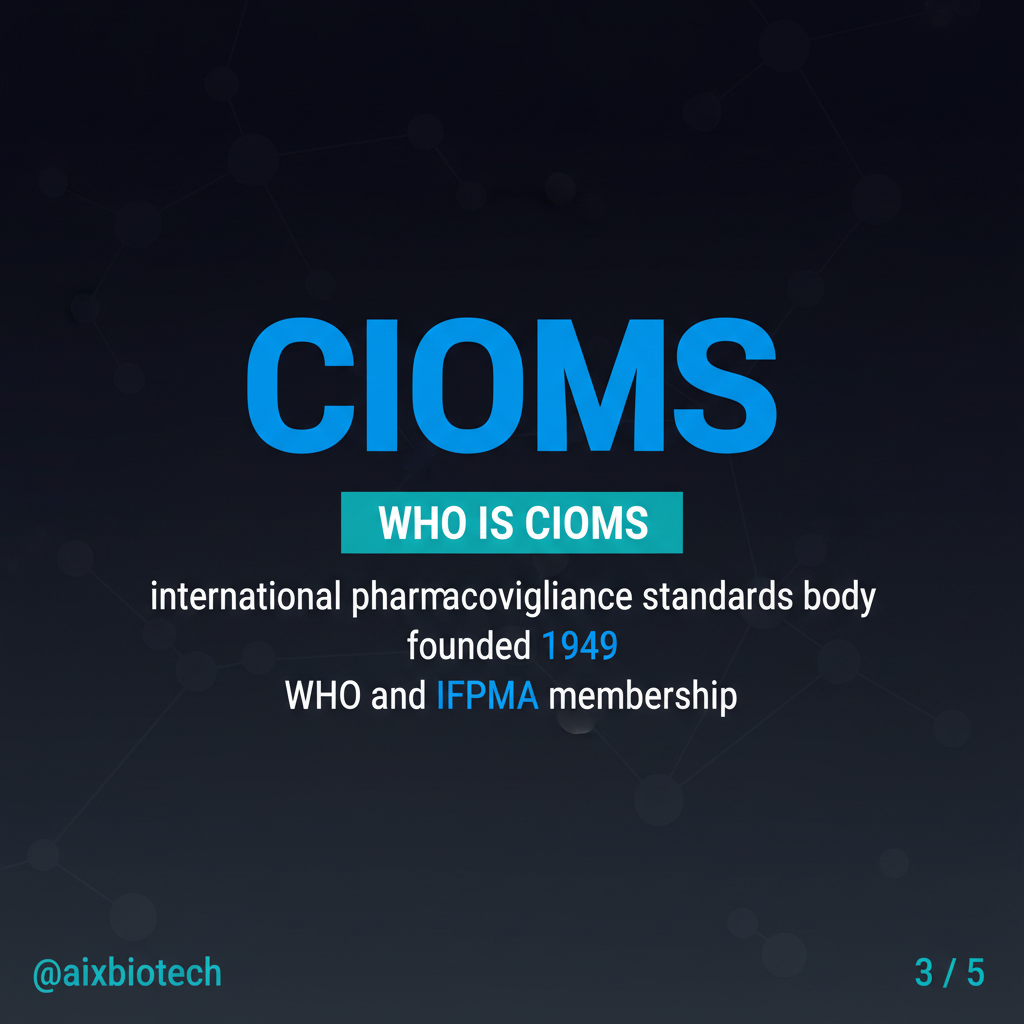
What the 2025 CIOMS report means for PV teams
The 2025 CIOMS Working Group XIV report on AI in pharmacovigilance is the most significant regulatory science publication in the PV space this year. It validates AI-assisted case processing, signal detection, and aggregate report drafting as legitimate tools, provided the methodology is documented and a qualified pharmacovigilance professional reviews and approves the output.
This is not theoretical. Regulators at the FDA and EMA are both members of CIOMS. When CIOMS validates an approach, it signals that regulators are prepared to accept submissions that use it, provided the documentation requirements are met. PV teams that have been waiting for regulatory clarity before deploying AI now have it.
Key stat: AI PBRER platforms claim first-draft production time reductions of up to 60% compared to manual production. Source: PBRER-AGI platform documentation, 2025.
What AI does in PBRER production
AI operates across three stages of PBRER production: data architecture, narrative drafting, and quality checking.
Data architecture is the stage where AI adds the most time compression. A PBRER requires synthesising case data from multiple sources — spontaneous reports, literature cases, clinical trial safety data, real-world evidence — into a structured benefit-risk framework. AI tools connected to the safety database execute this synthesis automatically, producing a structured data package that a human analyst would take days to assemble manually.
Narrative drafting uses large language models to produce first-draft narrative sections based on the structured data package. The AI drafts the benefit-risk summary, the cumulative exposure section, and the signal evaluation narrative. A qualified pharmacovigilance medical writer reviews and edits these drafts. The AI does not produce the final text. It produces a starting point that is structurally correct and data-accurate.
Quality checking runs automated consistency checks across the full document before the qualified professional review. It flags data discrepancies, missing section content, formatting errors, and inconsistencies between the narrative and the data tables.
Tools PV teams are deploying
PBRER-AGI is a purpose-built AI platform for autonomous pharmacovigilance reporting. It uses multi-agent AI systems to synthesise safety data across the full PV ecosystem and produce PBRER drafts for qualified reviewer sign-off.
Veeva Vault Safety has AI-assisted modules for case processing and signal detection that integrate with the PBRER production workflow. For teams already on Veeva Vault, this is the lowest-friction path to AI-assisted aggregate reporting.
Oracle Health Sciences has similar capabilities within its Argus Safety platform, which remains the most widely deployed safety database in the industry. AI modules within Argus can automate the data synthesis stage of PBRER production.
The compliance framework
The non-negotiable rule is this: AI drafts, a qualified person approves. The PBRER submitted to regulators must be reviewed and signed off by a qualified pharmacovigilance professional. AI is a production efficiency tool, not a signatory. Documentation requirements include the name and version of the AI tool used, the validation status for the specific use case, the human review process applied, and any material changes made by the reviewer to the AI draft. GxP and 21 CFR Part 11 apply. This documentation becomes part of the PBRER quality file and is available for inspection.
Our earlier analysis of AI signal detection in pharmacovigilance covers the upstream application of AI to safety data. Signal detection and aggregate reporting are parts of the same data infrastructure and are most efficient when deployed together.
FAQ
Does AI-assisted PBRER drafting change the submission format?
No. The ICH E2C(R2) format requirements remain the same. AI changes the production process, not the output format.
How do regulators view AI-produced PBRER drafts?
The 2025 CIOMS report indicates that regulators accept AI-assisted drafting provided the qualified reviewer oversight is documented. No regulator has indicated that AI-assisted drafting is grounds for additional scrutiny, provided the validation and review requirements are met.
What happens if the AI produces an inaccurate narrative section?
The qualified reviewer catches it and corrects it. This is why the human review stage is non-negotiable. AI accuracy in data-driven narrative sections is high, but not perfect.
AI is not filing the PBRER. A qualified person is. AI handles the data architecture so that qualified person spends their time on judgment, not formatting. That is a better use of professional expertise by any measure.
Based on publicly available information. This analysis covers non-proprietary, publicly disclosed data only.