AI Regulatory Submission Drafting in Pharma and Biotech: From Months to Weeks Without Cutting Corners
Regulatory submissions are the most document-intensive process in pharma and biotech. A standard NDA or MAA dossier runs to hundreds of thousands of pages across dozens of modules. A type II variation can take a regulatory affairs team weeks to draft, review, and compile. And the cost of an error is not measured in revisions. It is measured in months of delayed approval and millions in lost revenue. AI regulatory submission drafting is not about removing human judgement from this process. It is about removing the parts that do not require it.
In May 2025, the FDA announced that its first generative AI pilot had allowed scientists to complete review tasks in minutes that had previously taken days (LinkedIn, Regulatory Affairs Network, 2025). In January 2026, the FDA and EMA jointly published ten guiding principles for AI use in drug development, signalling that both agencies are not just tolerating AI in regulatory processes but actively framing governance for it (Ropes Gray, 2026). The regulatory environment is moving. The question for biotech regulatory affairs teams is whether they move with it or fall further behind.
Where AI Creates Real Value in the Submission Process
Regulatory submission drafting has several distinct phases, and AI adds value differently across each one. Understanding where the leverage points are is what separates teams that capture real efficiency gains from those that add an AI tool to their workflow without meaningfully changing how long things take.
The highest-value applications are in three areas: first-draft generation for structured documents, cross-referencing and consistency checking across dossier modules, and gap analysis between draft submissions and agency guidance requirements.
First-draft generation is where AI saves the most time. Module 2 summaries, variation cover letters, risk management plan sections, and labelling change justifications all follow predictable structures that AI handles well when given the right source documents and a clear prompt. A regulatory writer who previously spent two days on a first draft can review and refine an AI-generated draft in half a day. That is not a marginal gain. Multiplied across a portfolio of variations and submissions, it compounds into significant capacity.
Cross-referencing is where AI prevents the most errors. Dossier inconsistencies between modules, between the summary and the study reports, between the proposed label and the clinical data, are among the most common causes of agency questions and requests for clarification. AI tools that scan the full dossier for internal consistency flag these issues before submission rather than after.
Gap analysis is where AI supports regulatory strategy. Tools that compare draft submissions against current FDA and EMA guidance, recent precedent decisions, and agency reflection papers can identify gaps in the dossier narrative before it reaches reviewers. This is particularly valuable for novel mechanisms, ATMPs, and products entering markets under accelerated pathways where precedent is limited and guidance is still evolving.
Why This Matters for Biotech Regulatory Teams Now
- FDA and EMA are aligning on AI governance: The joint publication of ten AI principles for drug development in January 2026 (EMA, FDA, 2026) signals that both agencies are building regulatory frameworks that accommodate AI-assisted submissions. Teams that understand these principles are better positioned to use AI in ways that will not attract additional scrutiny during review.
- Variation volume is accelerating: Post-approval lifecycle management has become more complex as products reach more markets and face more frequent labelling, manufacturing, and indication changes. Regulatory teams managing 50 or more variations per year cannot scale headcount to match the volume. AI drafting tools are one of the few ways to absorb that growth without proportionally increasing team size.
- Review timelines are tightening: The EMA’s end-of-year submission guidance for 2025 noted that high submission volumes were creating procedure start delays into 2026. Teams that submit cleaner, better-prepared dossiers get through review faster. AI consistency checking directly reduces the round-trip time caused by agency questions on dossier gaps.
- The talent market for regulatory writers is constrained: Experienced regulatory writers are in short supply in every major biotech hub. AI drafting tools extend the capacity of the regulatory writers you have without requiring additional headcount. A team of five that uses AI drafting tools effectively can output at the pace of a team of seven or eight.
- Agentic AI is entering regulatory workflows: DeepCeutix reported in 2025 that agentic AI is reclaiming up to 40% of review time in early pilots. RAPS 2025 coverage confirmed that the FDA’s August 2025 final guidance on Predetermined Change Control Plans for AI-enabled software functions is opening structured pathways for AI in regulated submissions. The infrastructure for compliant AI use in regulatory affairs is being built now.
A Concrete Example: Type II Variation Drafting
A mid-size biotech with a commercial oncology product needs to submit a type II variation to add a new indication based on a Phase III trial. The regulatory affairs team has the clinical study report, the updated label, and the agency guidance. In a traditional workflow, the regulatory writer spends three to four days drafting Module 2.5 (clinical overview) and Module 2.7 (clinical summary), cross-checking references against the study report, and preparing the variation cover documentation.
With an AI drafting tool configured for eCTD submission requirements, the writer uploads the clinical study report and the existing approved dossier sections. The AI generates a first-draft Module 2.5 following the standard structure, with placeholders flagged where data from the study report needs to be verified against the clinical tables. The writer reviews, edits, and approves. Total time: one day instead of three or four. The remaining capacity goes to strategic work on the labelling negotiation and the risk management plan update.
The same workflow applies to type IA and IB variations, PSUR sections, and post-approval commitments. Across a full year of portfolio activity, the efficiency gain is substantial. For context on how AI is transforming other document-intensive functions in biotech, see how pharma office workers can use compliant AI tools for document-heavy tasks and how AI is closing margin gaps in biotech commercial operations.
How to Start Without Creating Compliance Risk
- Start with non-regulated document types: Internal summaries, briefing documents for pre-submission meetings, and background research on agency precedent are ideal starting points. No regulated data, no GxP workflow implications, immediate productivity gain.
- Use enterprise-grade tools only: Consumer AI tools must never be used for regulatory submission drafting. Microsoft 365 Copilot in enterprise configuration, Azure OpenAI deployed within your tenant, or purpose-built regulatory AI platforms with validated data handling are the appropriate tools. All require IT and legal sign-off before touching any submission-related documents.
- Treat AI output as a first draft, always: No AI-generated submission section should go to an agency without expert review by a qualified regulatory professional. The FDA and EMA’s joint AI principles explicitly require human oversight and traceability. AI generates the draft. The regulatory expert is accountable for what is submitted.
- Document your AI use in your quality system: As agency guidance on AI in submissions develops, maintaining clear records of where AI was used in the drafting process and how outputs were reviewed will become a standard expectation. Start building that documentation practice now, before it is required.
- Do not use AI on unpublished clinical data without validated infrastructure: Clinical study reports, unpublished trial data, and draft regulatory correspondence are regulated documents. They must not enter any AI tool that has not been validated for GxP use and signed off by IT, legal, and quality. This boundary is firm regardless of the time pressure on any given submission.
Key Takeaway
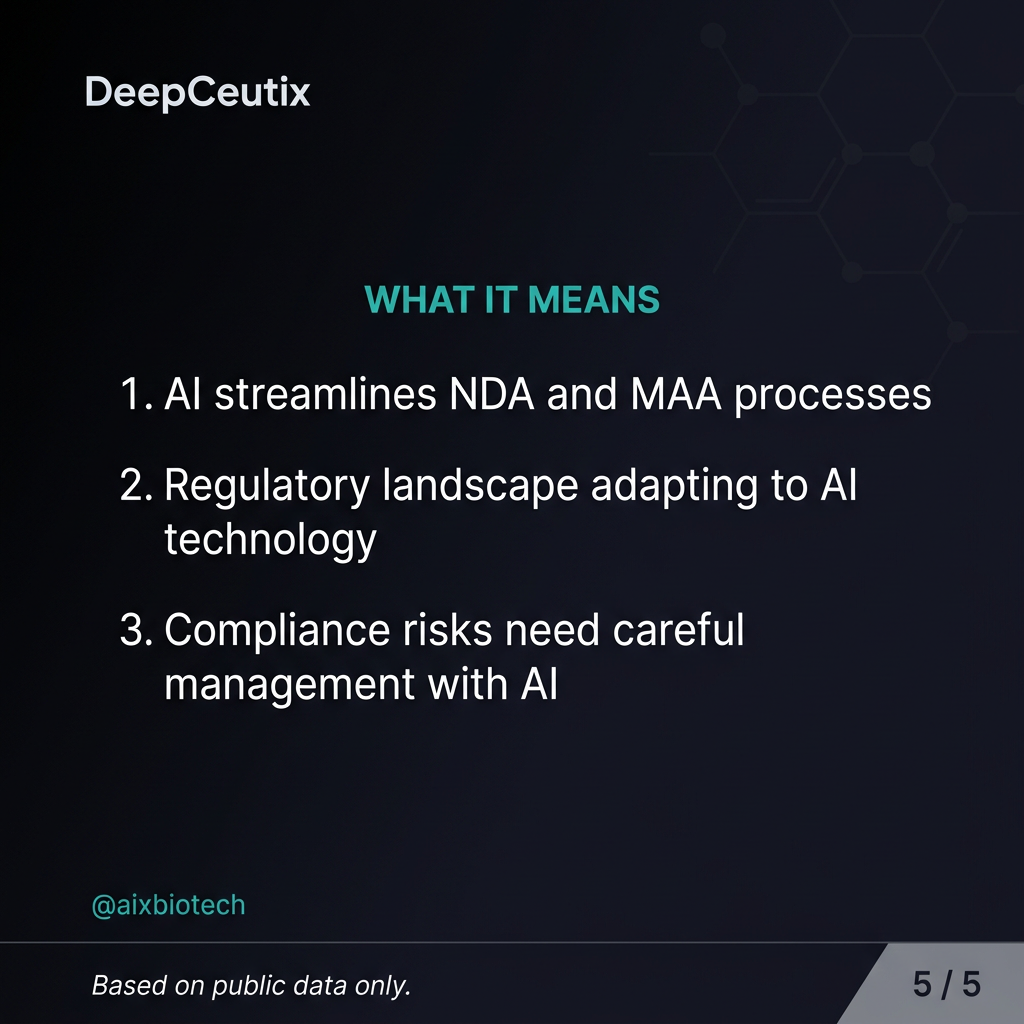
AI regulatory submission drafting is not a future capability. It is a present one, with FDA and EMA actively framing governance for it in 2025 and 2026. The teams that build structured, compliant AI drafting workflows now will process more submissions, with fewer errors, in less time than teams that are waiting for the perfect tool or the perfect guidance. The perfect guidance is not coming. What is coming is more volume, tighter timelines, and a widening gap between teams that have adapted and those that have not.
Frequently Asked Questions
Is AI-assisted regulatory submission drafting compliant with FDA and EMA requirements?
The FDA and EMA published joint AI principles for drug development in January 2026, establishing a governance framework that accommodates AI-assisted submissions. Key requirements include human oversight of all AI-generated content, traceability of AI use in the submission process, and validation of AI tools used in regulated workflows. AI drafting tools used within enterprise-controlled environments with proper documentation and expert review are consistent with current agency guidance.
What types of regulatory documents can AI draft effectively?
Module 2 clinical and non-clinical summaries, variation cover letters, labelling change justifications, PSUR narrative sections, risk management plan modules, and pre-submission briefing documents are all well-suited to AI first-draft generation. Documents that require direct data extraction from unpublished clinical study reports or raw trial data require validated GxP infrastructure and must not be processed by general-purpose AI tools without compliance clearance.
How do I ensure AI-generated regulatory content is accurate?
Treat all AI output as a first draft requiring expert review. Regulatory professionals should verify all factual claims against source documents, check all cross-references within the dossier, and confirm alignment with current agency guidance before any content is included in a submission. The regulatory affairs professional remains fully accountable for what is submitted, regardless of how the first draft was generated.
Based on publicly available information. This analysis covers non-proprietary, publicly disclosed data only. References: FDA (2025, 2026), EMA (2026), Ropes Gray (2026), DeepCeutix (2025), RAPS (2025).