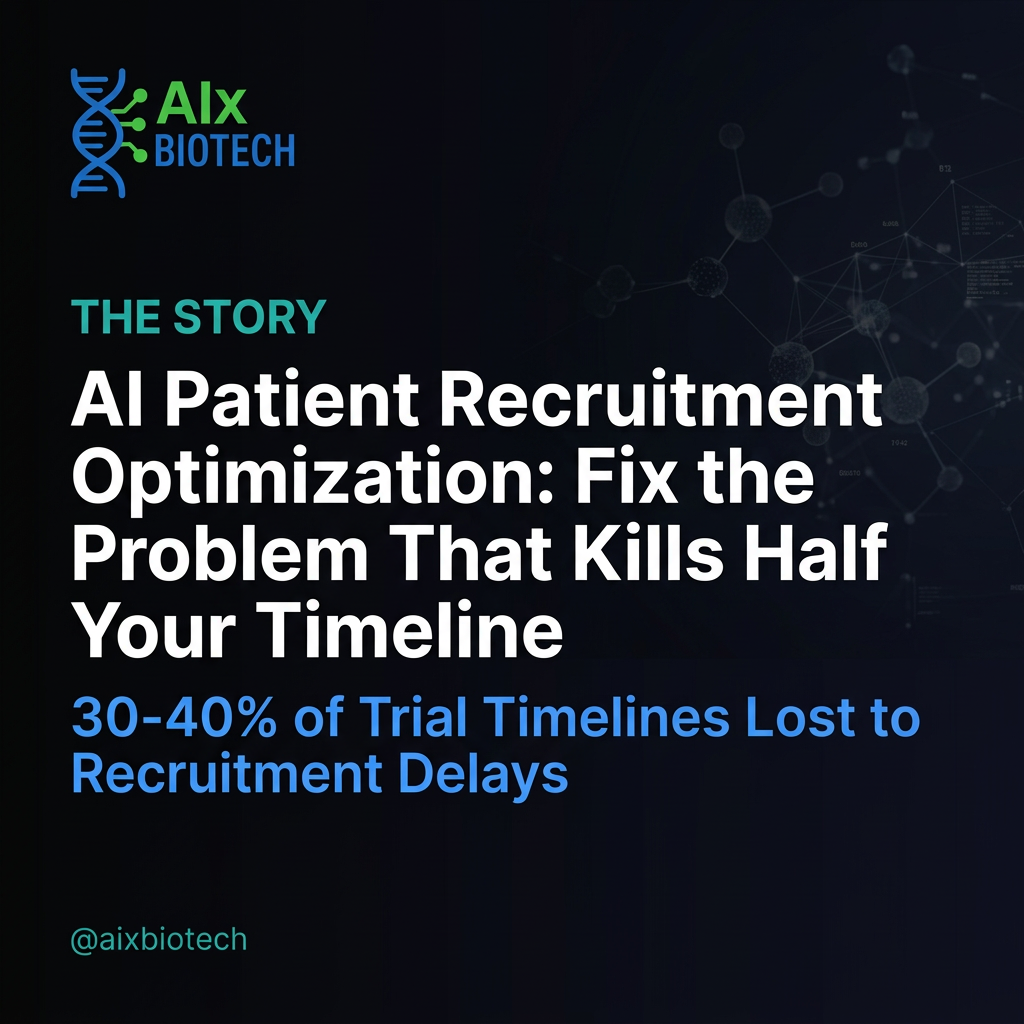
AI Patient Recruitment Optimization in Clinical Trials: Fixing the Problem That Kills Half Your Development Timeline
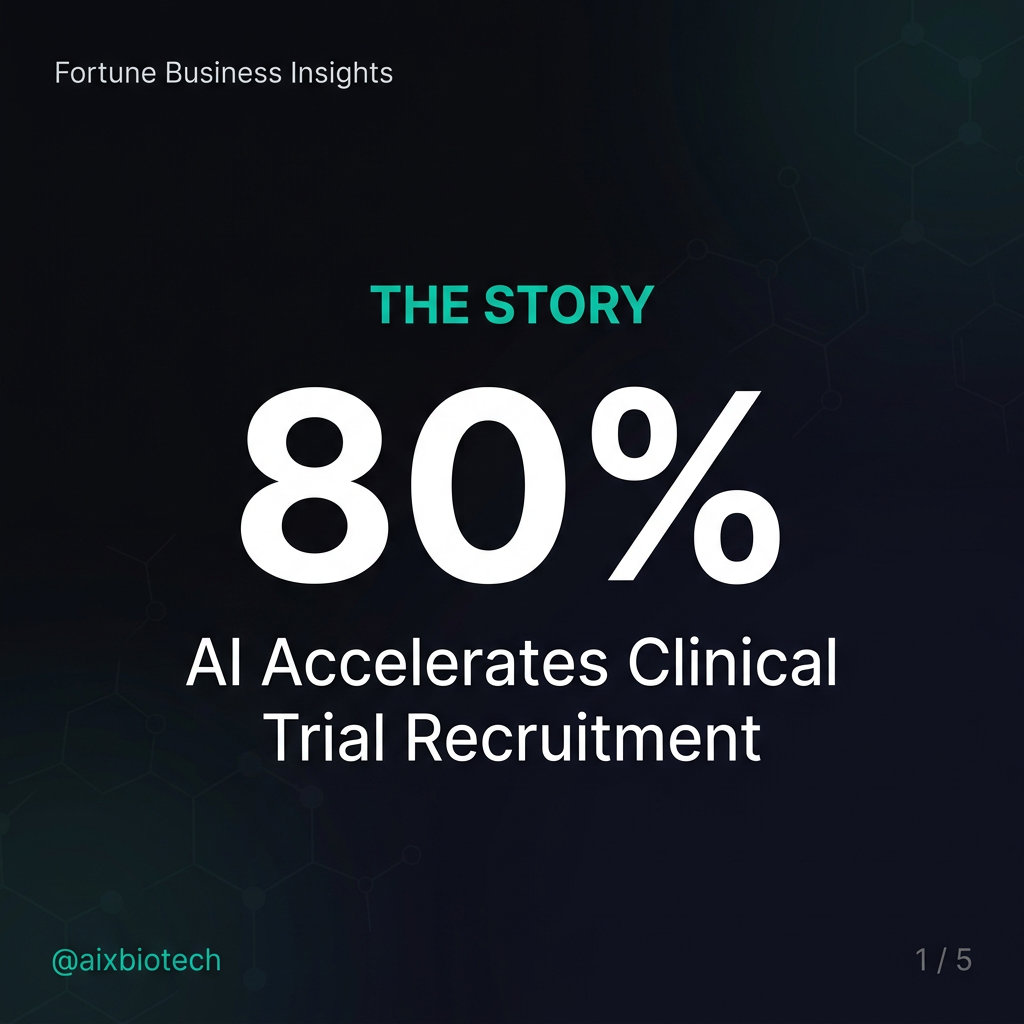
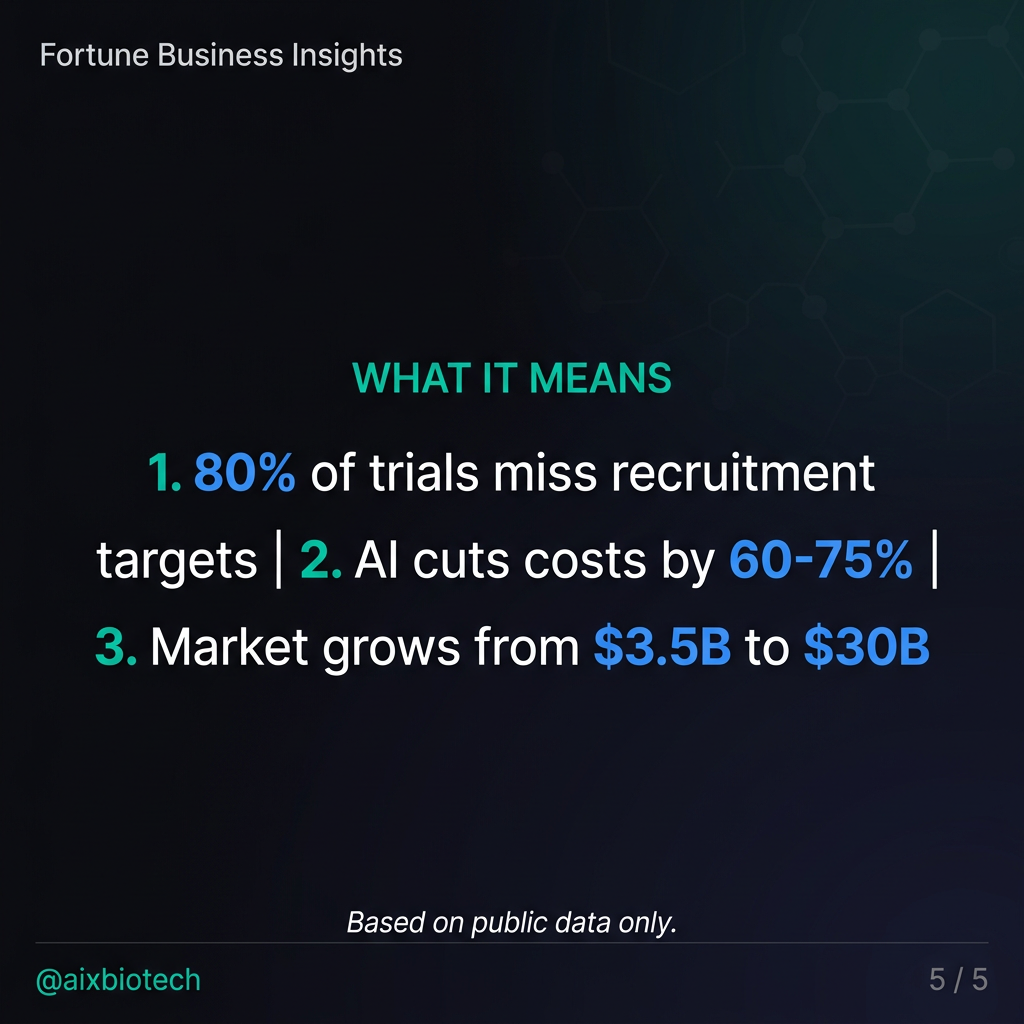
Eighty percent of clinical trials fail to meet their recruitment targets. Nearly a third of all Phase III studies fail to enroll a single patient on time. Recruitment delays extend trial timelines by an average of six to eight months, according to ScienceDirect’s 2025 clinical trial AI review. For a biotech company running a pivotal trial, six to eight months of delay is not a scheduling inconvenience. At a daily burn rate for a Phase III programme that can exceed $500,000, it is a nine-figure cost before the first patient even reaches the primary endpoint.
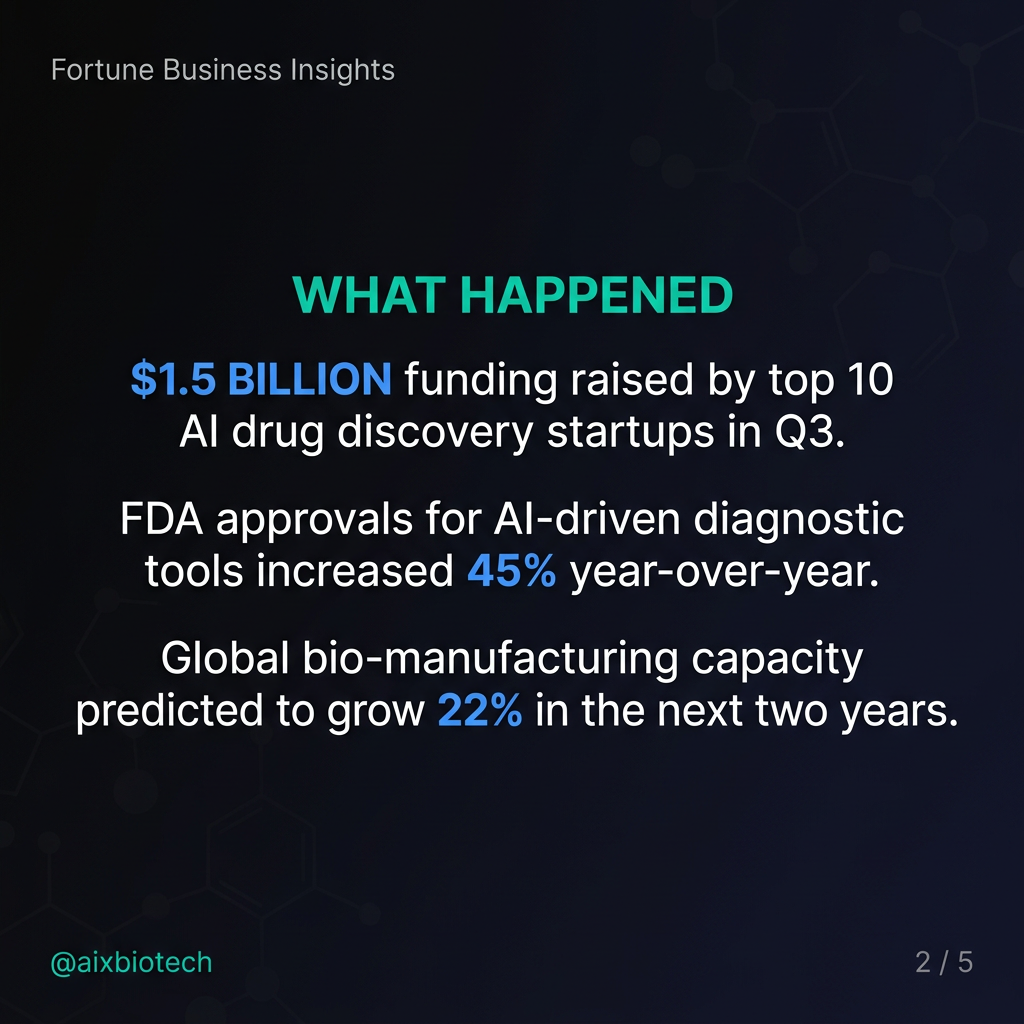
The AI-powered patient recruitment and retention market is growing at 19.5% CAGR through 2035, according to Insight Ace Analytic. That growth rate is not driven by speculation about future potential. It is driven by biotech and CRO teams that have run the numbers and concluded that AI recruitment tools are one of the highest-return investments in their clinical development budget.
Why Clinical Trial Recruitment Keeps Failing
The recruitment problem in clinical trials is structural, not accidental. Trial eligibility criteria have become more complex as biotech moves toward precision medicine targets with narrow patient populations. A patient who meets all inclusion criteria may not be identified in the clinical system because their relevant data is in an unstructured note rather than a coded field. A site selected for a trial may have the right patient population on paper but low screening-to-enrolment conversion rates that do not become visible until the trial is already running behind target.
Traditional recruitment approaches rely on site investigators to identify eligible patients from memory and referral networks, supplemented by patient advertising and registry outreach. These approaches worked adequately for broad-indication trials targeting common conditions. They systematically underperform for biomarker-selected oncology trials, rare disease programmes, and any indication where the eligible population is defined by genetic or molecular criteria that are not routinely coded in electronic health records.
The AI clinical trial site selection market is projected to reach $1.74 billion by 2026 at a 22.4% CAGR, according to Data Insights Reports. The market is growing because the traditional approach to site selection, based on investigator relationships and historical enrolment data, misses the systematic analysis of real-world patient data, site performance benchmarks, and competitive trial density that AI tools can run across thousands of sites simultaneously.
What AI Patient Recruitment Optimization Actually Does
AI recruitment optimization operates across three phases of the recruitment challenge: site selection, patient identification, and screening process optimization.
In site selection, AI tools analyse real-world data including electronic health records at the aggregate level, claims data, and published demographic data to identify where the eligible patient population is actually concentrated, rather than where the sponsor has existing investigator relationships. They cross-reference this with site performance data from previous trials, competitive trial density from ClinicalTrials.gov, and site activation timelines to rank sites by expected enrolment contribution. A trial that would have distributed 40 sites based on relationship maps and historical precedent may concentrate 30 sites in locations where AI analysis shows the eligible population and site performance profile are materially stronger.
In patient identification, AI tools that integrate with electronic health record systems can scan patient records for eligibility criteria in both structured data fields and unstructured clinical notes using natural language processing. A PMC 2025 study applied an AI system to clinical notes to identify trial-eligible heart failure patients and found materially higher identification rates than standard query-based approaches. For biomarker-selected oncology trials where the eligible population is defined by a specific mutation or expression level, AI screening of pathology reports and molecular testing results can identify patients who would not appear in a standard ICD-coded database query.
In screening process optimization, AI tools analyse the drop-off at each stage of the screening funnel, from initial contact to informed consent to first dose, and identify which eligibility criteria are causing the highest screen failure rates. This intelligence feeds protocol amendment decisions and site-specific support interventions that improve conversion rates without changing the scientific integrity of the trial.

Why This Matters for Biotech Clinical Development Teams
- Recruitment failure is a primary cause of trial termination: Lifebit.ai’s 2025 clinical trial recruitment analysis found that approximately 80% of clinical trials fail to meet recruitment targets, with many studies failing to enroll a single patient. A trial that terminates for recruitment failure destroys the entire development investment to that point.
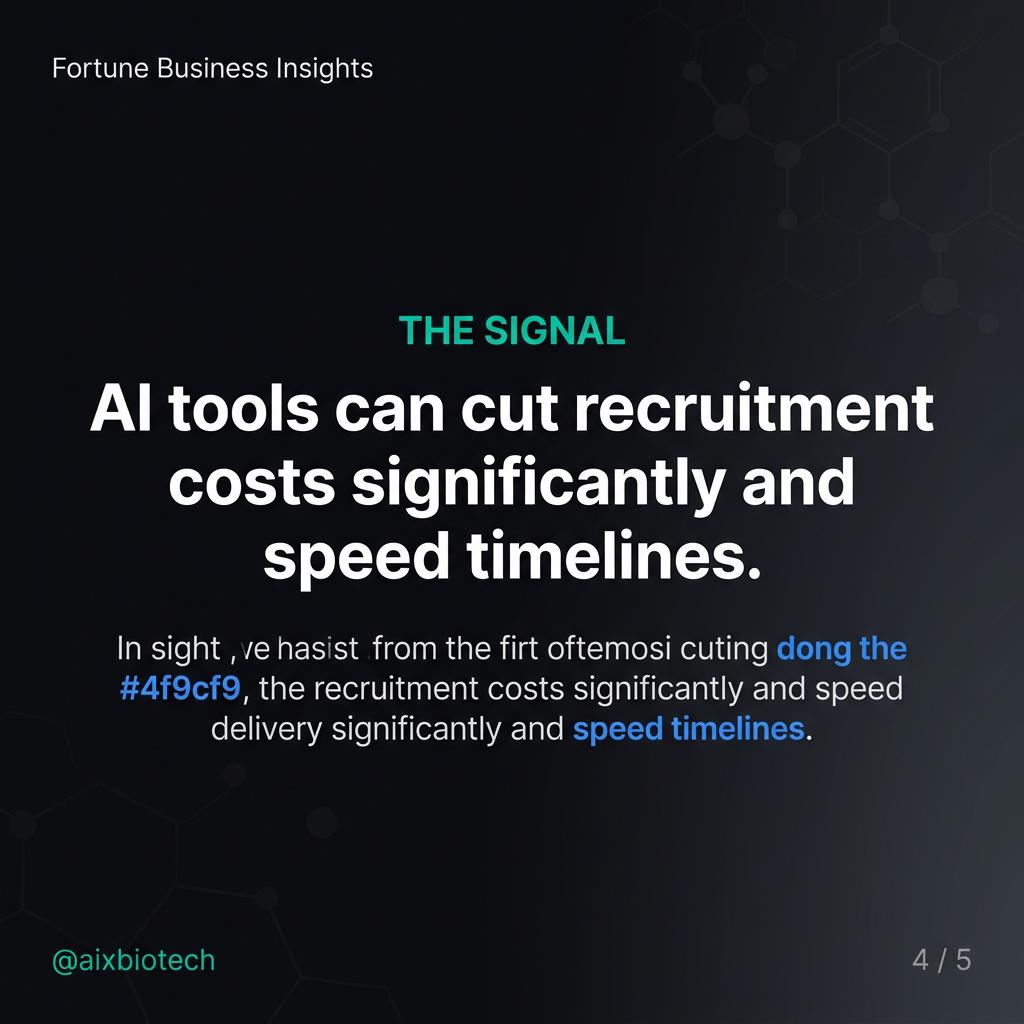
- Per-patient recruitment costs are high and AI reduces them significantly: PharmaTrialConnect’s 2025 analysis found that traditional recruitment costs can exceed $20,000 per patient in complex trials. AI-driven platforms reduce these costs by 60 to 75 percent through improved targeting and reduced screening failures. At scale across a pivotal programme, that reduction is material.
- Timeline compression has direct financial value: For a product with peak annual revenue of $500 million, every month of development timeline reduction is worth approximately $40 million in net present value terms, assuming a 10-year exclusivity period and standard discounting. AI recruitment tools that compress the enrolment period by three to six months are generating NPV gains that dwarf their cost.
- Precision medicine trials require precision recruitment: Broad-indication trials recruiting common patient types can still function with traditional recruitment approaches. Biomarker-selected oncology, rare disease, and gene therapy programmes cannot. The eligible population is too small and too dispersed for investigator networks and patient advertising to find reliably.
- The AI clinical trials market is scaling fast: Fortune Business Insights projects the AI-based clinical trials solution provider market to grow from $3.50 billion in 2026 to $30.15 billion by 2034. The infrastructure for compliant, validated AI use in clinical operations is being built at scale right now.
A Concrete Example: Biomarker-Selected Phase III Site Optimization
A mid-size biotech is planning a Phase III trial for a biomarker-selected oncology asset. The eligible population is patients with a specific KRAS mutation who have failed two prior lines of therapy. The traditional site selection process identifies 35 oncology centres based on investigator relationships, geographic distribution, and historical trial participation.
An AI site selection tool analyses electronic health record aggregate data, molecular testing volumes, and claims data across 800 potential sites. It identifies 12 sites within the traditional 35 that have materially higher KRAS mutation testing volumes and lower competitive trial density than the relationship-based selection suggested. It also identifies 8 sites outside the traditional selection that rank in the top quartile for expected eligible patient volume based on the molecular data profile.
The trial activates with an adjusted site list that concentrates resources on the highest-performing expected sites. Enrolment reaches target three months earlier than projected under the traditional selection approach. At a Phase III burn rate of $400,000 per day, three months is $36 million. The AI site selection tool did not cost $36 million.
For context on how AI is improving data-driven decisions across the biotech development and commercial continuum, see how AI is improving biotech pipeline valuation modeling and how AI is transforming specialty drug demand forecasting.
How to Start Without Creating Compliance Risk
- Site selection is the lowest-risk entry point: AI site selection tools that work from aggregate, de-identified data rather than individual patient records are appropriate for use without the same level of validation overhead as tools that access individual EHR data. Start here. The ROI is clear and the compliance complexity is manageable.
- Patient-level EHR screening requires strict data governance: Any AI tool that accesses individual patient records for eligibility screening must operate within a validated, controlled environment with appropriate patient consent frameworks, GDPR and HIPAA compliance, IRB oversight, and IT security sign-off. This is not optional. These are regulated data and the governance requirements apply in full.
- Validate screening AI tools as clinical decision support: AI tools that inform patient eligibility decisions in a regulated clinical trial context fall within the scope of clinical decision support software requirements. Work with regulatory and quality teams to define the appropriate validation and documentation framework before deployment.
- Use competitive trial intelligence continuously: ClinicalTrials.gov is publicly available. AI tools that continuously monitor competitive trial registrations in your indication, tracking new trials, site activations, and protocol amendments, give your clinical operations team intelligence that directly informs site selection and patient retention strategy. This requires no patient data at all.
Key Takeaway
Patient recruitment is where clinical trials fail and where AI delivers some of its highest-value outcomes in biotech. The 80% failure rate to meet recruitment targets is not a fixed feature of clinical development. It is a problem with a technological solution that is already deployed and validated in the field. The biotech teams investing in AI recruitment optimization now are compressing their development timelines, reducing their per-patient costs, and improving the probability that their Phase III programmes complete on schedule. The teams that are not are absorbing the six to eight month delays and the nine-figure costs that come with them.
Frequently Asked Questions
Does AI patient recruitment require access to individual patient records?
Not necessarily. AI site selection tools can work from aggregate, de-identified data and claims data without accessing individual patient records. AI tools that screen individual patients for eligibility from EHR data require validated, controlled deployment with patient consent frameworks, GDPR and HIPAA compliance, IRB oversight, and IT security sign-off. The compliance requirements are materially different between these two use cases.
How much can AI reduce clinical trial recruitment costs?
PharmaTrialConnect’s 2025 analysis found that AI-driven recruitment platforms reduce per-patient recruitment costs by 60 to 75 percent through improved targeting and reduced screen failure rates. The actual reduction in any specific trial depends on the indication, the complexity of the eligibility criteria, and the baseline performance of the traditional recruitment approach being replaced.
Can AI tools help with rare disease trial recruitment?
Yes, and this is one of the highest-value applications. Rare disease trials have eligible populations that are too small and too dispersed for traditional investigator network and patient advertising approaches to find reliably. AI tools that scan molecular testing data, patient registry records, and published case reports can identify eligible patients across a much broader geographic and institutional footprint than human networks can cover manually.
Based on publicly available information. This analysis covers non-proprietary, publicly disclosed data only. References: ScienceDirect (2025), Insight Ace Analytic (2025), Fortune Business Insights (2026), Data Insights Reports (2025), PharmaTrialConnect (2025), Lifebit.ai (2025), PMC (2025).