
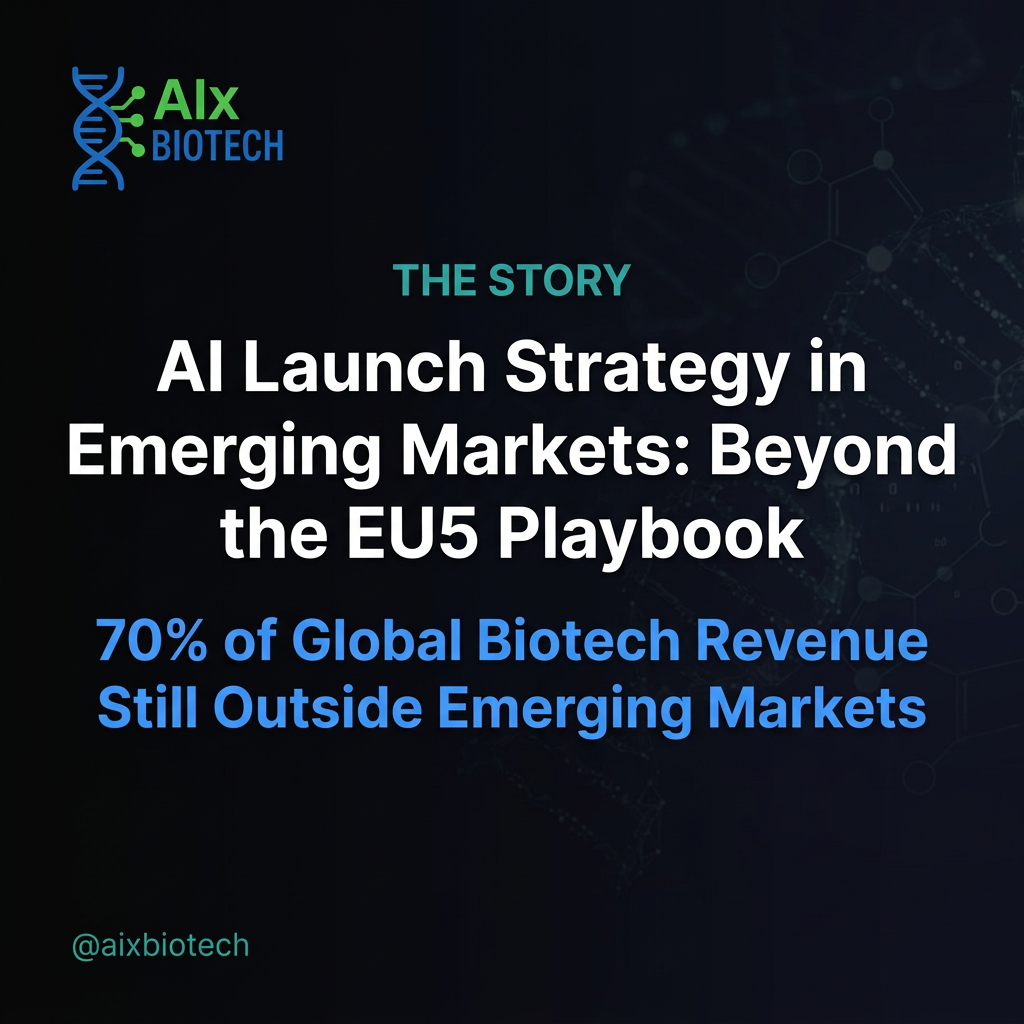
AI Launch Strategy in Emerging Markets: Why the Playbook That Works in the EU5 Fails Everywhere Else
The EU5 launch model assumes things that do not exist in emerging markets. Structured reimbursement timelines. Published HTA criteria. Standardised payer processes that experienced market access teams can navigate from precedent. Emerging markets in Central and Eastern Europe, the Middle East, North Africa, and Southeast Asia operate on different logic. Tender cycles replace reimbursement negotiations. Distributor relationships define market access more than payer decisions. Regulatory timelines are less predictable and less published. Data that would take a week to assemble for a German launch takes months to gather manually for a CEE or MENA market.
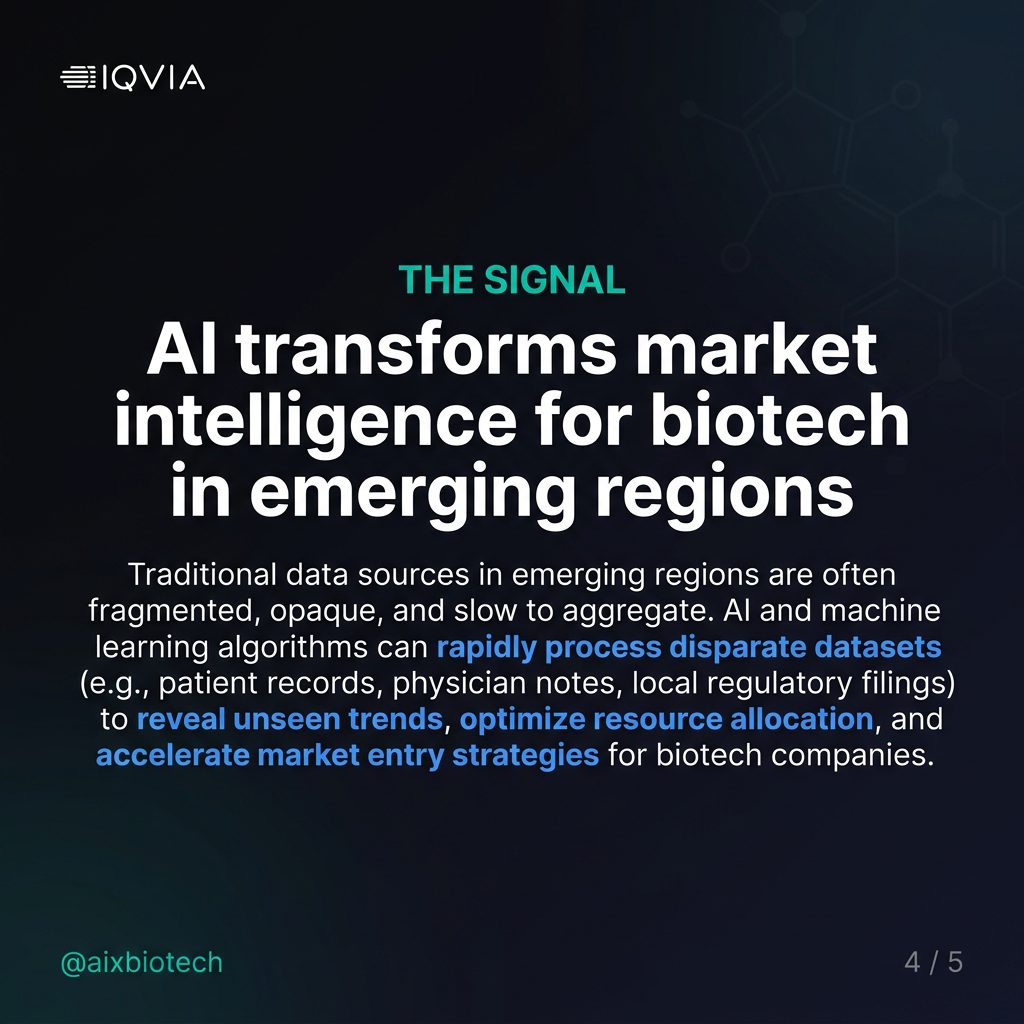
AI is changing this. Not by eliminating the complexity of emerging markets, but by making the intelligence required to navigate that complexity faster, cheaper, and more systematic to assemble. For biotech companies deciding which emerging markets to prioritise, in what sequence, and with which partners, AI-driven market intelligence is the difference between a data-informed decision and an expensive intuition.
Why Emerging Markets Strategy Has Been Underserved by Analytics
The analytics infrastructure that supports EU and US launch decisions, published real-world data, structured HTA assessments, benchmarked pricing databases, and established market research methodologies, does not exist in the same form for most emerging markets. A market access team preparing a launch in Poland, Romania, or Saudi Arabia is assembling intelligence from a combination of local distributor reports, regulatory agency websites, competitive intelligence from in-country medical representatives, and periodic market research studies. The result is a decision built on incomplete data that was expensive to collect and is already outdated by the time the strategy is finalised.
CMS Law’s January 2026 report on healthcare and pharma in CEE described a market defined by increasing digital health investment, complex reimbursement reform processes, and significant variation in healthcare infrastructure across countries that are geographically close but operationally distinct. Pharma Executive’s 2025 analysis of CEE market access explicitly challenged the myth that CEE markets can be treated as a single region with a single launch approach. They cannot. Poland, Czech Republic, Hungary, Romania, and Bulgaria each have distinct reimbursement processes, tender systems, and pricing mechanisms that require country-specific analysis.
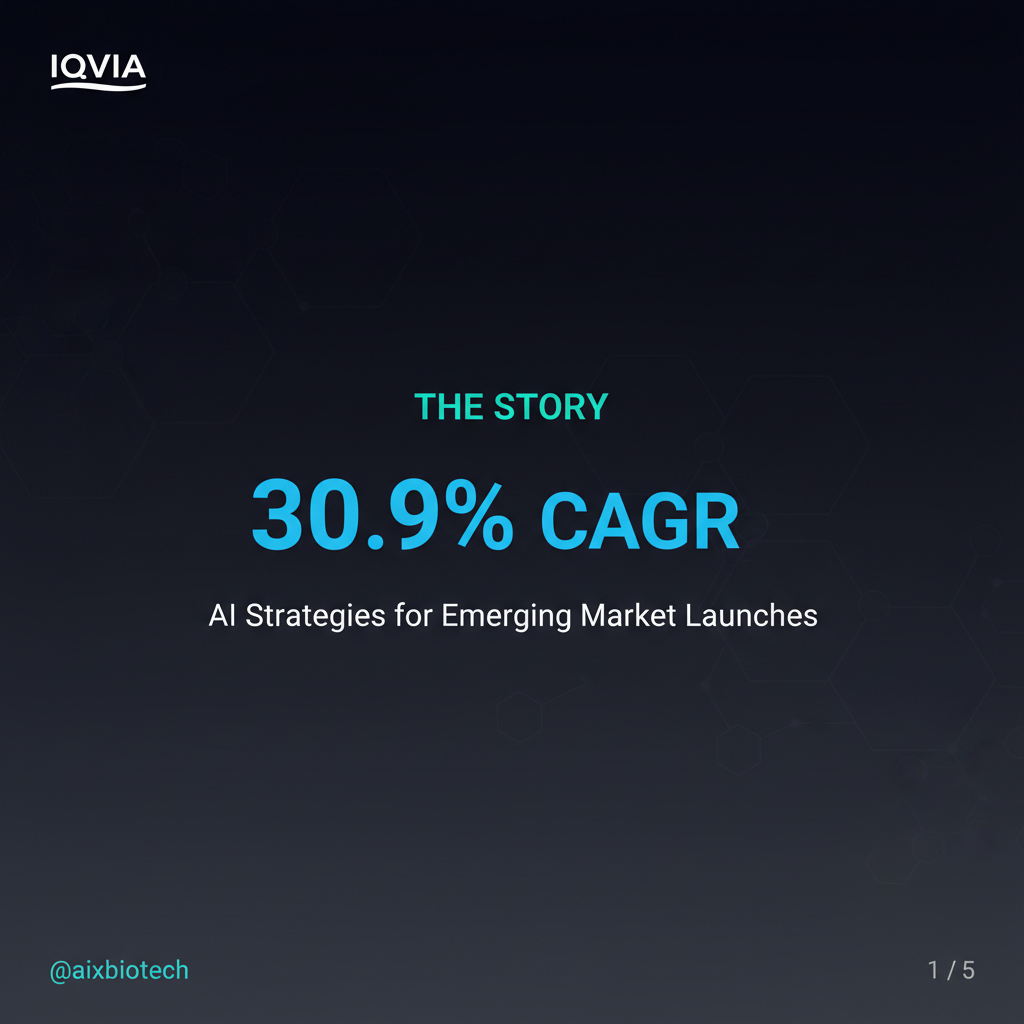
In MENA, the dynamics are different again. IQVIA’s Q2 2025 MEA pharmaceutical market report projected the Middle East and Africa pharma market reaching $69.56 billion by 2029, growing at 5.54% CAGR. The MENA AI in healthcare market is growing at 30.9% CAGR from 2024 to 2029 according to GlobalNewsWire’s April 2025 report. But the commercial model in most MENA markets is tender-driven and distributor-dependent in ways that require different launch sequencing logic than European markets.
What AI Adds to Emerging Market Launch Strategy
AI adds value to emerging market strategy across four dimensions that are particularly under-resourced in traditional approaches.
The first is market sizing and demand modeling from non-standard data sources. Structured pharmaceutical sales data in many emerging markets is incomplete, delayed, or not publicly available. AI tools that build demand models from proxy data sources, including disease prevalence databases, healthcare infrastructure indicators, import and export data for pharmaceutical products, and published epidemiological studies, can generate market size estimates that are more current and more granular than what market research agencies deliver on a six-month production cycle.
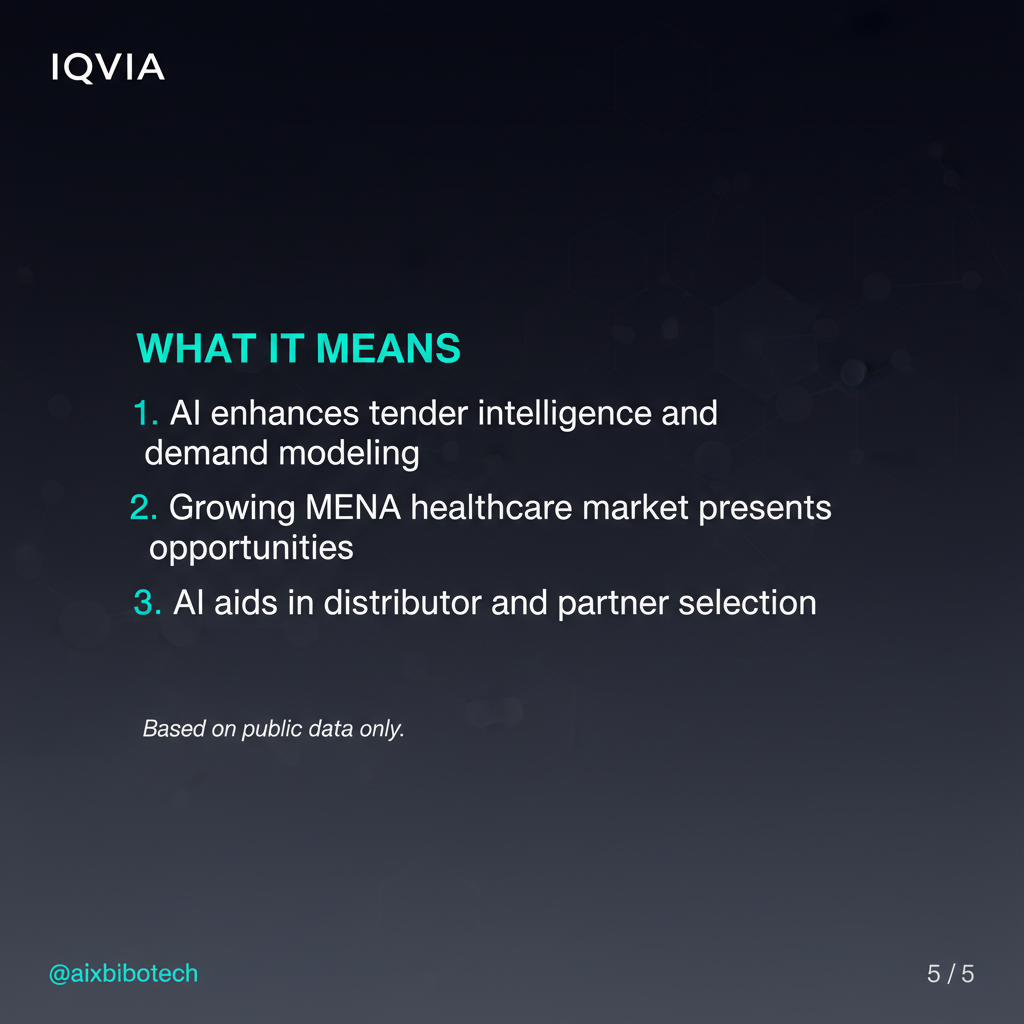
The second is tender intelligence and prediction. Many emerging markets, particularly in CEE and MENA, distribute products through public tender processes rather than commercial reimbursement channels. AI tools that monitor tender databases, historical award prices, and competitive bidding patterns can model tender probability and optimal pricing for each tender event. For a biotech commercial team managing 15 or 20 active tender markets simultaneously, the difference between manual tender tracking and AI-assisted monitoring is measured in analyst headcount and response speed.
The third is distributor and partner selection. In markets without direct commercial infrastructure, the quality of the distributor relationship determines commercial performance. AI tools that analyse distributor performance data from available public sources, including company filings, market share data, and regulatory compliance records, alongside structured assessments of each distributor’s market footprint, can rank potential partners more systematically than relationship-based selection processes.
The fourth is regulatory pathway intelligence. Emerging market regulatory agencies vary enormously in their requirements, processing times, and precedent decisions. AI tools that continuously monitor regulatory agency databases, recent approvals, and agency guidance publications can identify the fastest pathway to approval for a specific product in a specific market and flag regulatory risks before the submission is filed.
Why This Matters for Biotech Commercial and Market Access Teams
- EU pharma reform is pushing pan-European launches: Pharma Focus Europe’s March 2025 analysis of the EU pharma reform noted that the new +2 year regulatory data protection incentive for EU-wide launches is ending the traditional staggered launch approach that deprioritised smaller EU markets. Biotech companies now have a commercial incentive to launch across CEE markets simultaneously with the EU5, which requires faster, scalable market intelligence for markets that were previously treated as second-tier.
- MENA is growing faster than many teams realise: The MENA AI in healthcare market growing at 30.9% CAGR to 2029 reflects underlying healthcare investment growth that creates real commercial opportunities. LinkedIn’s 2025 MENA pharma report identified 2025 as a year of significant margin pressure due to tender dynamics and local competition. Teams that understand tender patterns through AI intelligence are better positioned to price and bid competitively.
- Emerging market launches are increasingly a platform capability: L.E.K. Consulting’s 2025 analysis of AI at first launch for biotechs identified that AI commercial tools allow emerging biotech companies to build commercial intelligence infrastructure that was previously only accessible to large pharma with dedicated regional teams. AI democratises emerging market intelligence.
- Distributor selection errors are expensive: A distributor relationship in an emerging market is typically a three to five year commitment with significant contractual and operational switching costs. AI-assisted distributor analysis that surfaces performance data and market footprint information more systematically reduces the probability of expensive partner selection errors.
A Concrete Example: CEE Tender Strategy for a Specialty Biotech Product
A biotech with a specialty immunology product approved in the EU is planning launches across six CEE markets over 24 months. The traditional approach assigns a regional market access manager to Poland and Czech Republic and relies on distributor intelligence for Hungary, Romania, Bulgaria, and Slovakia.
An AI-assisted approach runs continuous monitoring of all six tender databases from day one. It models historical tender award prices, competitive bidding patterns, and tender frequency for the relevant ATC code in each market. It identifies that Romania’s tender cycle for this product class runs 18 months ahead of Hungary’s, which should pull forward the Romania submission timeline. It flags that Bulgaria’s recent tender awards for the same product class have shown a 22% price reduction trend over three cycles, which has pricing implications for the tender bid strategy.
The market access manager now has systematic intelligence across all six markets rather than deep knowledge of two and distributor reports for the rest. The launch sequence and pricing decisions are built on current data rather than regional precedent.
For context on how AI is reshaping market access strategy more broadly, see how AI price corridor modeling is changing multi-market pricing decisions and how AI is closing the distributor margin gap in biotech commercial operations.
How to Start Building AI Emerging Market Intelligence
- Start with public tender databases: Most CEE and MENA markets publish tender results and award prices in accessible online databases. An AI tool that systematically monitors these sources, structures the data, and flags relevant tenders is a high-value, low-compliance-risk entry point. No patient data. No regulated information. Just public procurement intelligence made systematic.
- Build a regulatory intelligence feed for your priority markets: Regulatory agency websites in most emerging markets publish approval decisions, guideline updates, and agency news. An AI tool that monitors these sources continuously and translates and summarises relevant updates removes a manual process that is currently done inconsistently across most biotech regional teams.
- Use published market data to build baseline demand models: WHO disease burden data, national health statistics, and IQVIA published market reports are appropriate inputs for AI-assisted demand modeling. No proprietary patient data is required to build a meaningful first-pass market size model for most emerging market indications.
- Apply the same data governance rules as all other AI use: Proprietary commercial data, unpublished clinical data, and confidential distributor agreements must not enter AI tools outside your controlled environment. The intelligence building described above is built entirely on publicly available sources. Keep it that way.
Key Takeaway
Emerging markets represent a growing share of global biotech revenue opportunity and a disproportionate share of the commercial complexity that most teams are least equipped to handle systematically. The EU pharma reform incentive for pan-European launches, the MENA market growth trajectory, and the increasing commercial maturity of CEE healthcare systems are all pulling biotech commercial teams toward markets where they do not have the same depth of intelligence infrastructure they have for the EU5. AI emerging market intelligence tools close that gap faster and at lower cost than building regional teams in every market. The teams building systematic AI intelligence for their emerging market launches now are making better decisions, with less guesswork, in markets that are growing faster than their EU counterparts.
Frequently Asked Questions
Which emerging markets are most relevant for biotech AI launch strategy?
Central and Eastern Europe including Poland, Czech Republic, Hungary, Romania, Bulgaria, and Slovakia are increasingly relevant given the EU pharma reform pan-European launch incentive. The MENA region, particularly Saudi Arabia, UAE, Turkey, and Egypt, represents significant growth opportunity with distinct tender-driven commercial models. Southeast Asian markets including South Korea, Taiwan, and Thailand are growing in strategic importance for precision medicine and oncology assets. The specific priority depends on the therapeutic area, the product’s competitive profile, and the regulatory pathway available in each market.
How does AI help with tender-driven markets in CEE and MENA?
AI tender intelligence tools monitor public tender databases continuously, model historical award prices and competitive bidding patterns, and flag upcoming tender events relevant to a specific product class. For biotech teams managing multiple active tender markets simultaneously, this replaces a labour-intensive manual monitoring process with systematic intelligence that updates in real time and generates bid recommendations based on historical patterns.
What data is needed for AI emerging market demand modeling?
Meaningful baseline demand models for most emerging market indications can be built from publicly available sources including WHO disease burden data, national health statistics, IQVIA published market reports, and epidemiological literature. No proprietary patient data or unpublished clinical information is required for first-pass market sizing. More sophisticated models that incorporate claims data or patient registry data require the same validated, controlled infrastructure and compliance clearance as any other patient-level data use.
Based on publicly available information. This analysis covers non-proprietary, publicly disclosed data only. References: CMS Law (2026), Pharma Executive (2025), IQVIA MEA (2025), GlobalNewsWire MENA AI Healthcare (2025), L.E.K. Consulting (2025), Pharma Focus Europe (2025), LinkedIn MENA Pharma Report (2025).