
AI in biotech talent acquisition: how to hire faster without lowering the bar
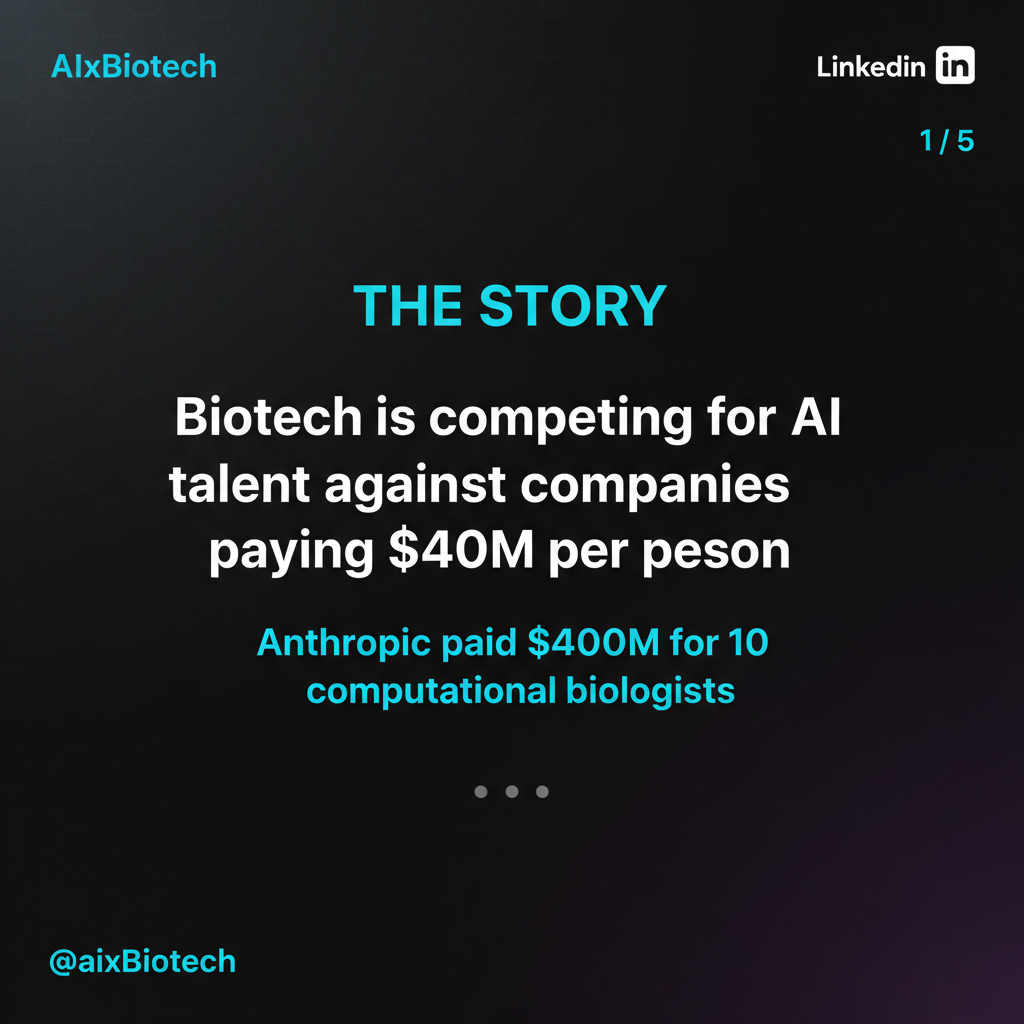
Anthropic paid over $400 million for a team of fewer than 10 computational biologists this week. That works out to approximately $40 million per person.
That is the talent market biotech companies are competing in when they try to hire AI-specialist roles in 2026. The competition is no longer other biotech companies. It is foundation model companies with acquisition budgets that most biotech HR departments cannot match on salary alone.
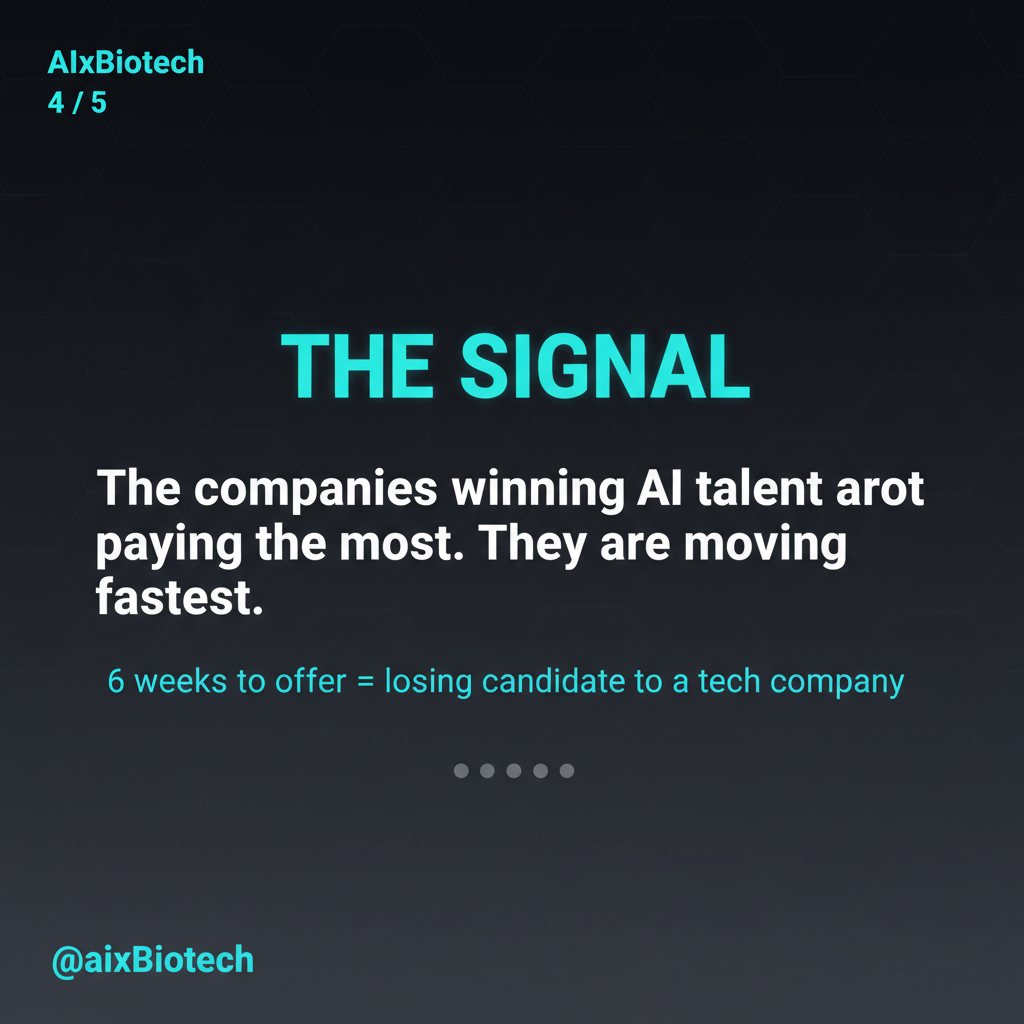
The teams that are winning this competition are not outspending the tech giants. They are outpacing them: identifying the right candidates faster, assessing fit more accurately, and compressing the time from first contact to signed offer before the competition has even scheduled a first interview.
Why traditional biotech hiring fails for AI roles
Traditional biotech hiring was designed for a talent market where the best candidates were actively looking, where PhD credentials were the primary filter, and where a six to eight week hiring process was considered normal. None of those conditions apply to AI-specialist roles in 2026.
The best computational biologists, AI researchers with biological domain expertise, and machine learning engineers with pharma experience are not actively applying to job boards. They are being recruited directly, often while already employed, by multiple competing organisations simultaneously. A hiring process that takes six weeks will lose candidates to companies that can move in two.
CV keyword matching, a foundational tool of traditional ATS systems, is structurally misaligned with AI role assessment. The skills that matter in an AI biotech role — model architecture understanding, biological data fluency, validation methodology, regulatory awareness — are not well-represented in CV text and are not effectively filtered by keyword search.
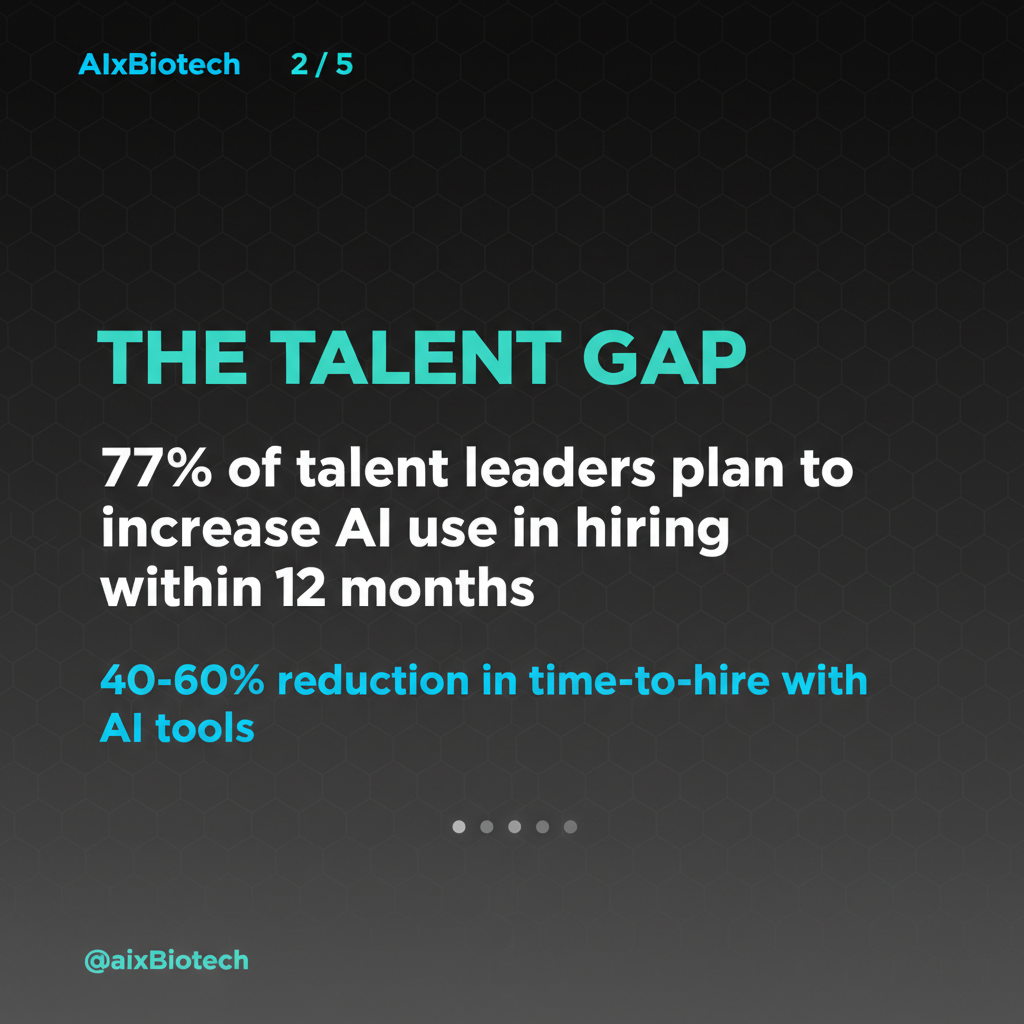
Key stat: LinkedIn’s 2025 Future of Recruiting report found that 77% of talent leaders plan to increase their use of AI in hiring processes within 12 months. Companies using AI hiring tools report 40 to 60% reductions in time-to-hire for specialist roles. Source: LinkedIn Talent Solutions, Future of Recruiting 2025.
What AI talent acquisition tools do differently
AI hiring tools operate across four stages of the talent acquisition process: sourcing, screening, assessment, and scheduling.
Sourcing uses AI to build candidate pipelines from multiple data sources simultaneously: LinkedIn, academic publication databases, conference speaker records, GitHub repositories, and patent filings. For computational biology roles, a candidate’s publication record and open-source contributions are more predictive of capability than their CV. AI sourcing tools aggregate and rank these signals at a scale no recruiter can match manually.
Screening uses structured AI assessment rather than CV keyword matching. Candidates respond to standardised questions about their approach to specific technical problems. AI models score these responses against a validated rubric. The output is a ranked candidate list with specific capability profiles, not a filtered list of keyword matches.
Assessment tools for technical roles include AI-proctored coding challenges, structured problem-solving exercises, and domain knowledge assessments that can be completed asynchronously. These tools allow candidates in different time zones to complete assessments on their own schedule, which matters when recruiting globally for rare specialisations.
Scheduling automation eliminates the administrative bottleneck that often adds one to two weeks to a hiring process. AI scheduling tools coordinate availability across multiple interviewers and candidates in real time, reducing the time from assessment completion to first interview to 24 to 48 hours.
Tools biotech talent teams are using
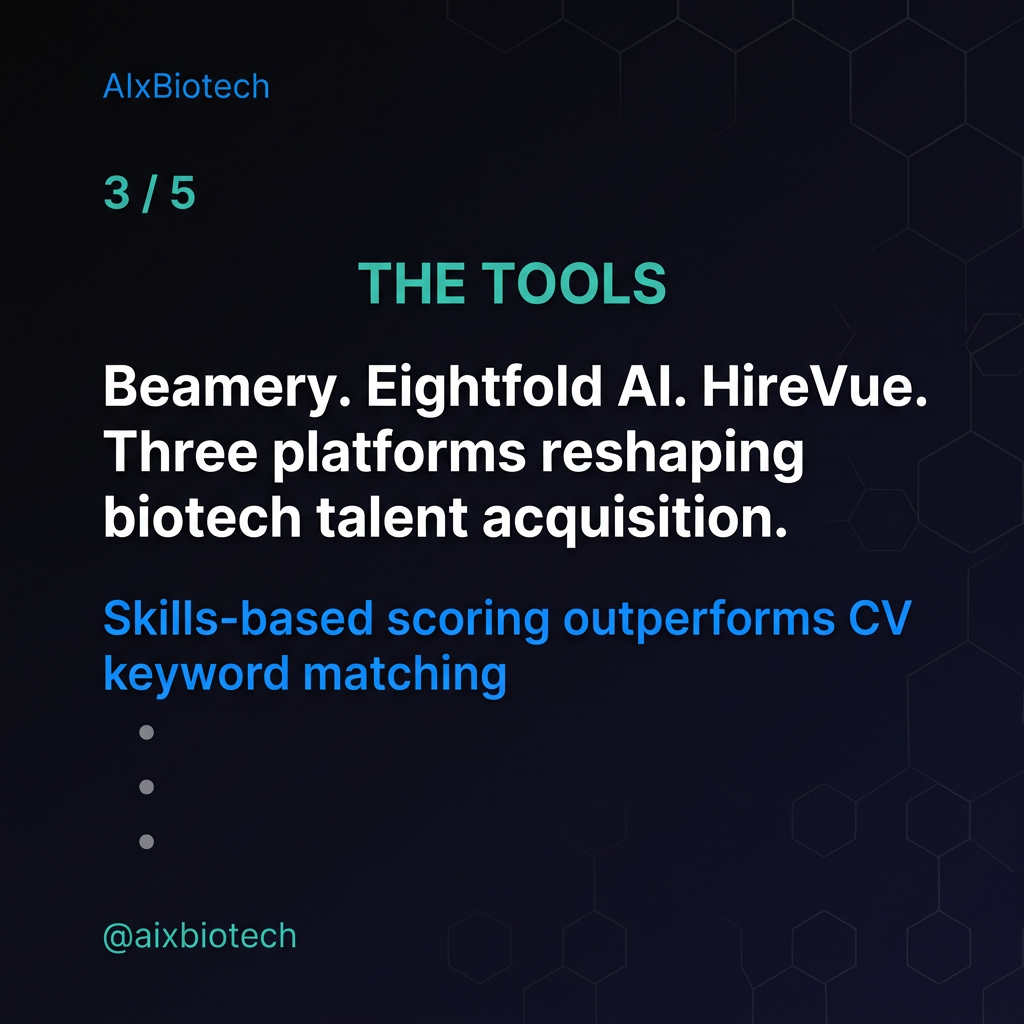
Beamery is the most widely adopted AI talent platform in the pharmaceutical and biotech sector. It uses AI to build skills-based candidate profiles, match candidates to roles, and track talent pool development over time. Its strength is in building pipelines for future roles, not just filling current ones.
Eightfold AI provides deep skills inference from CVs and career history, identifying transferable capabilities that are not explicitly stated. For biotech companies hiring from adjacent sectors like academia, medical devices, or data science, this is particularly useful.
HireVue is the leading AI video interview platform and is widely used for first-round screening in life sciences. Its AI assesses structured interview responses against validated competency frameworks.
The compliance dimension
AI hiring tools in regulated industries carry specific compliance considerations. EEOC guidance in the US requires that AI-assisted hiring tools be validated to ensure they do not introduce discriminatory bias in candidate selection. EU AI Act requirements, which apply to biotech companies operating in European markets, classify hiring AI as a high-risk system requiring conformity assessment.
Use AI hiring tools on non-sensitive candidate data only. CVs, assessment responses, and skills profiles are the appropriate inputs. Do not connect AI hiring tools to employee health data, compensation history, or other sensitive personal data categories. Validate any AI hiring tool for bias before deploying it in a live hiring process.
Our earlier analysis of AI vendor due diligence for biotech executives covers the four questions that apply here too: where does candidate data go, how was the model validated, what audit trails are available, and what is the vendor’s regulatory compliance status?
FAQ
Can AI hiring tools replace a talent partner or recruiter?
No. AI handles volume screening, skills assessment, and scheduling. The talent partner provides market intelligence, candidate relationship management, and offer negotiation. The combination is more effective than either alone.
How do you validate an AI hiring tool for bias?
Request the vendor’s adverse impact analysis documentation. This should show the tool’s selection rate across gender, ethnicity, and age categories compared to a validated benchmark. Any tool without this documentation should not be used in a regulated hiring process.
Are AI-assessed candidates aware that AI is being used?
EEOC guidance and EU AI Act requirements both require candidate disclosure when AI is used in hiring decisions. Candidates must be informed that AI is part of the assessment process. Most enterprise AI hiring tools include this disclosure in their candidate communications as standard.
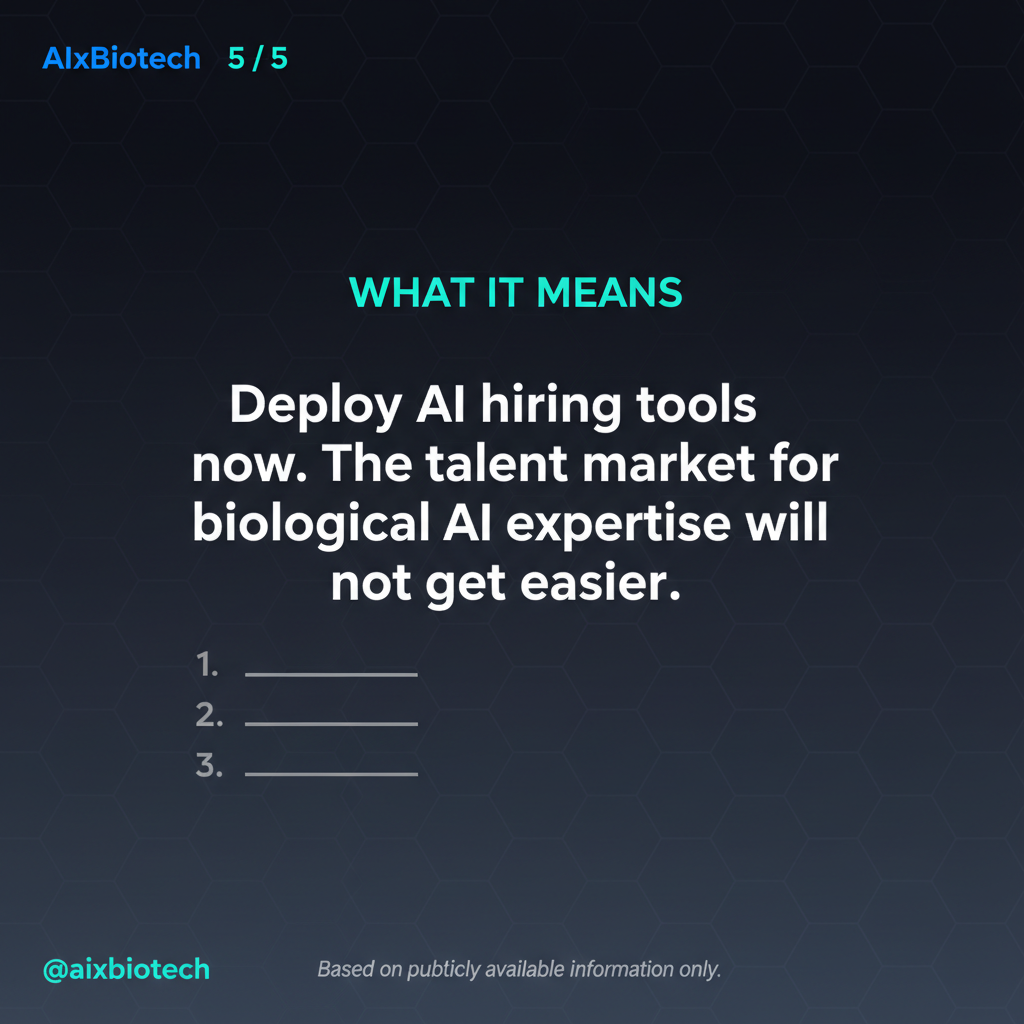
The talent race for AI-specialist biotech roles is already underway. The companies that build faster, more accurate hiring pipelines now will compound that advantage as the AI integration of biotech deepens.
Based on publicly available information. This analysis covers non-proprietary, publicly disclosed data only.