
AI Biotech Valuation Modeling: Why the rNPV Spreadsheet Is No Longer Enough
The risk-adjusted net present value model has been the gold standard for biotech asset valuation for two decades. It is rigorous, defensible, and built on assumptions that experienced analysts can stress-test. It is also static, slow to update, and built for a world where the key inputs, peak sales estimates, probability of success by phase, time to market, and competitive landscape, changed slowly enough that a quarterly update cycle was acceptable. That world is gone. AI-discovered assets are reaching Phase I at success rates of 80 to 90 percent according to DeepCeutix 2025 data, compared to historical industry averages of 40 to 60 percent. The assumptions that underpin every rNPV model built on historical data are being invalidated in real time.
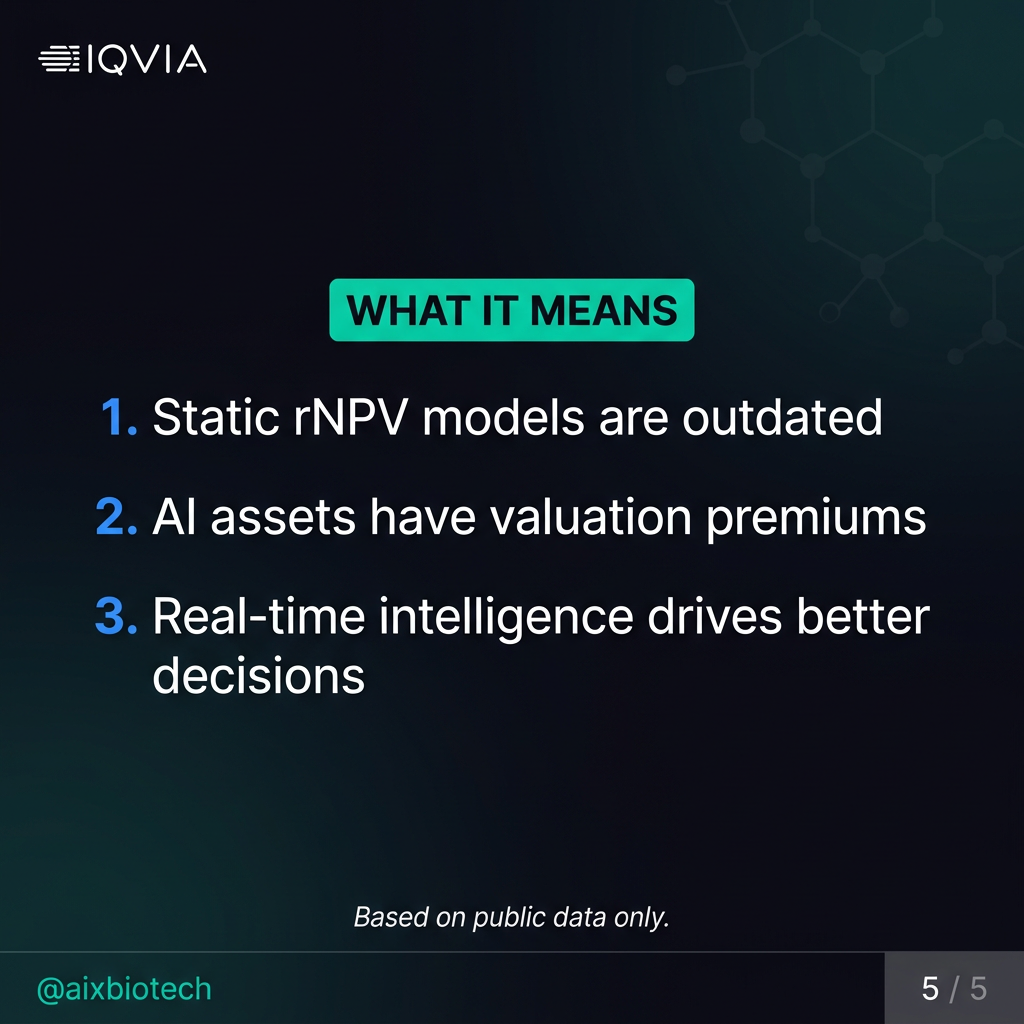
AI biotech valuation modeling is not about replacing the rNPV framework. It is about making the inputs dynamic, the scenarios faster to run, and the competitive landscape continuously monitored rather than updated at deal time. For biotech finance, BD, and investment teams, this is the difference between valuing an asset on the data you had three months ago and valuing it on what is known today.
Why Traditional Biotech Valuation Models Are Under Pressure
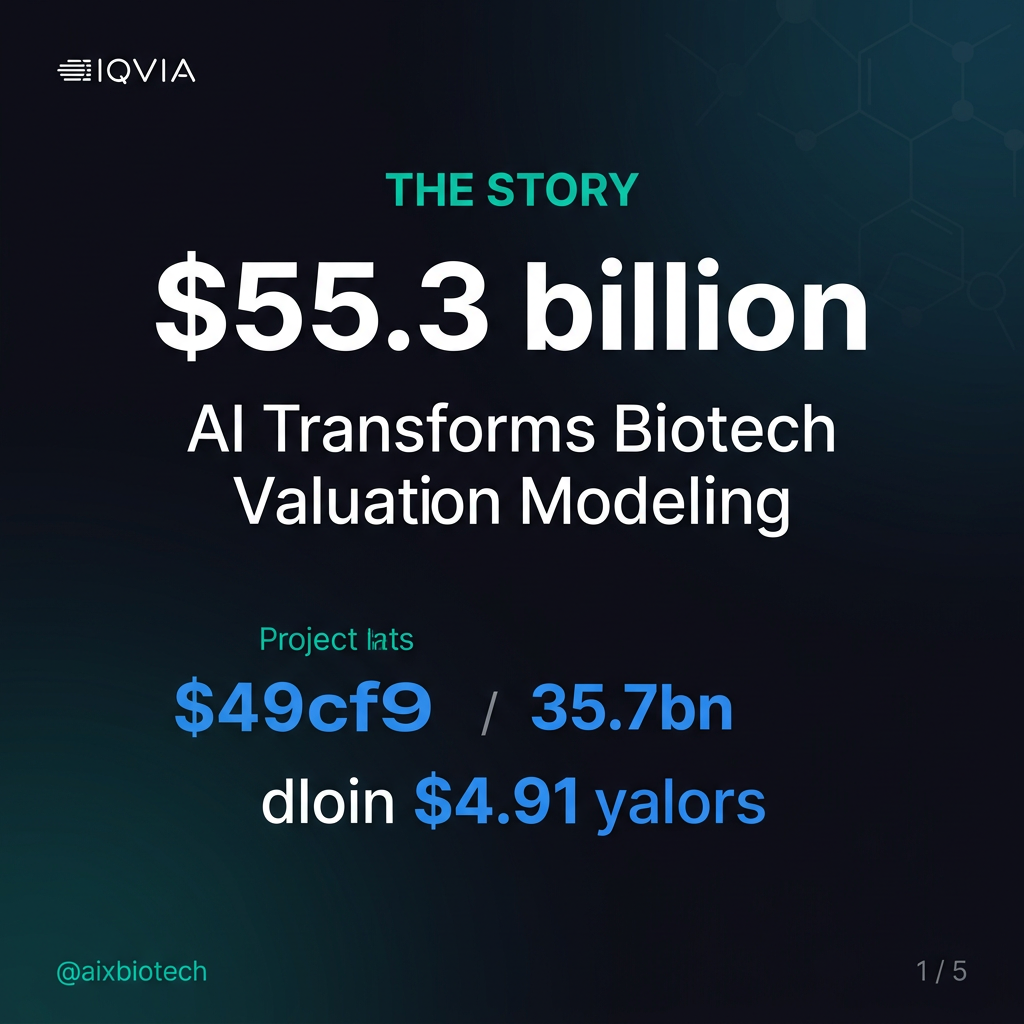
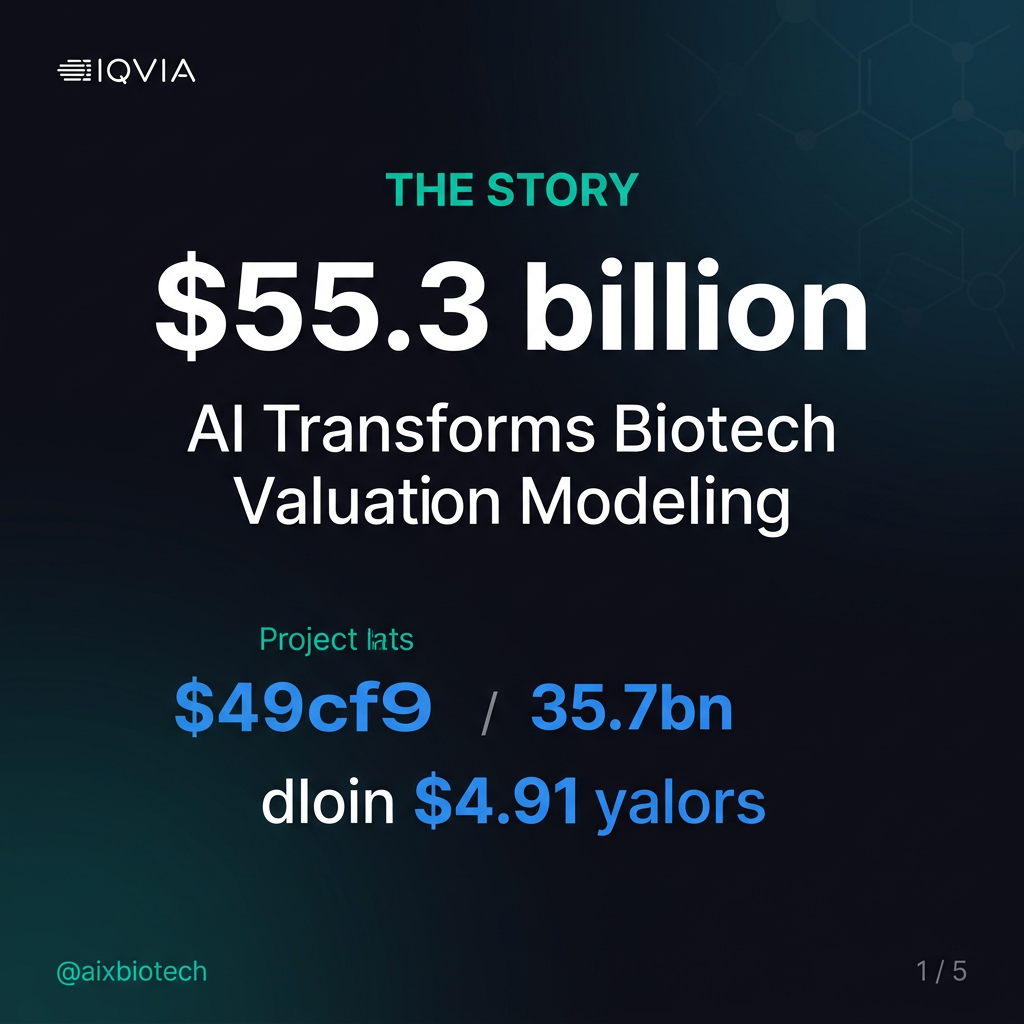
Biotech M&A in 2025 was strong. IQVIA’s 2026 biopharma M&A outlook reported that the top five therapy areas in M&A by value share included CNS at 23%, CVRM at 22%, and oncology at 20%. Dealforma recorded 198 AI and ML drug discovery deals across 2024 and 2025 with an aggregate value of $55.3 billion. PitchBook reported $3.2 billion in VC investment across 135 AI drug development startups in the 12 months to mid-2025.
Against that backdrop, the valuation challenge is acute. AI-enabled pipelines are fundamentally different assets from traditional small molecule or biologic programmes. Their probability of success assumptions are different. Their time-to-candidate timelines are different. Their competitive dynamics are different, because multiple companies using similar AI platforms targeting similar biology may be much closer to each other in development timeline than traditional competitive intelligence frameworks would suggest.
LinkedIn’s Nassim Zaagoub argued in a widely read 2026 analysis that traditional DCF models are failing in the AI era precisely because they were built to value assets whose key parameters change slowly. An AI-discovered asset in early Phase I today may have a fundamentally different competitive landscape in six months, and a quarterly rNPV update will not capture that.
What AI Biotech Valuation Modeling Adds
AI valuation tools for biotech assets add value across three dimensions that traditional models cannot address adequately.
The first is continuous competitive landscape monitoring. An AI system that continuously scans ClinicalTrials.gov, published literature, patent filings, regulatory submissions, and company press releases for competitive pipeline activity gives the valuation team a real-time picture of the competitive threat to a target asset’s market opportunity. A competitor Phase III readout that changes the competitive landscape for a target asset should update the valuation model the day it happens, not at the next quarterly review.
The second is probability of success calibration using AI-specific data. Historical PoS benchmarks by phase, built on decades of small molecule and biologic development data, are increasingly poor proxies for AI-discovered assets. AI valuation models trained on AI-specific pipeline outcomes, including the early-phase success rate data that is now accumulating from companies like Insilico Medicine, Recursion, and Exscientia, can generate PoS inputs that are calibrated to the actual performance characteristics of AI-enabled development programmes rather than to historical averages that predate them.
The third is scenario generation speed. A traditional rNPV model built in Excel can take a senior analyst two to three days to build from scratch for a new asset and several hours to run a comprehensive scenario analysis. An AI-augmented valuation framework generates base, upside, and downside scenarios across all key variables in minutes. This is critical in M&A processes where the time between initial screening and term sheet can be measured in days.
Why This Matters for Biotech Finance and BD Teams
- M&A timelines are compressing: Biopharma dealmaking in 2025 was characterised by compressed timelines as acquirers competed for a limited pool of late-stage assets (Pharmaceutical Technology, 2025). BD teams that can turn a first-pass valuation in hours rather than days have a structural advantage in competitive processes.
- AI pipeline valuations require new inputs: A biotech asset built on a validated AI platform commands a premium that traditional rNPV frameworks do not capture well. Sparkco’s 2025 valuation analysis identified that AI biotech companies require bespoke valuation frameworks that account for platform scalability, data moat quality, and AI-specific PoS benchmarks. Teams that cannot model these inputs are systematically mispricing AI assets.
- VC and licensing deal premiums are real: PitchBook reported in 2025 that AI biotechs were fetching significant valuation premiums relative to traditional drug discovery companies at equivalent stages. Understanding what drives those premiums, and whether they are justified in any specific deal, requires AI-capable valuation tools.
- Competitive intelligence has a direct valuation impact: A Phase III failure in a competitor programme changes peak sales assumptions, competitive pricing dynamics, and market share projections for every other asset in the same indication. Manual competitive intelligence tracking on a quarterly cycle misses these events between updates. AI-driven continuous monitoring does not.
A Concrete Example: AI-Augmented Due Diligence
A mid-size biotech is evaluating a licensing deal for a Phase II oncology asset from an AI-first discovery company. The traditional due diligence process would have a finance analyst building an rNPV model over two to three days, using historical oncology PoS benchmarks, a competitive landscape assessment based on a manual ClinicalTrials.gov search run at the start of the process, and peak sales estimates from a market research report published six months earlier.
An AI-augmented due diligence process does this differently. The competitive landscape is pulled from a continuously updated AI monitoring system rather than a point-in-time manual search. The PoS inputs are drawn from an AI-specific benchmark dataset rather than historical averages. The scenario analysis runs in minutes across 50 combinations of peak sales, PoS, time to market, and pricing assumptions rather than the five or ten scenarios the analyst had time to build manually.
The result is a valuation that is more current, more calibrated to the actual asset class, and more comprehensively stress-tested. The BD team enters the deal negotiation knowing the range of outcomes rather than the central estimate alone.
For context on how AI is reshaping deal intelligence and commercial analysis across the biotech sector, see how AI is closing the $356 billion distributor margin gap in biotech and how AI territory optimization is changing biotech commercial strategy.

How to Start Building AI Valuation Capability
- Start with competitive intelligence automation: Continuous monitoring of ClinicalTrials.gov, SEC filings, EMA and FDA approval databases, and company press releases using an AI scanning tool is the lowest-friction entry point. It requires no change to your existing valuation models and immediately improves the currency of the inputs you use.
- Build an AI-specific PoS database: Start collecting and tracking probability of success data specifically for AI-discovered assets from publicly disclosed pipeline outcomes. This is a multi-year investment that pays dividends as your deal volume grows and your internal benchmarks become statistically meaningful.
- Integrate AI scenario tools into your BD workflow: Tools like Azure OpenAI deployed within your tenant can generate rapid scenario analyses from structured valuation inputs. The analyst defines the assumptions. AI generates the scenarios and sensitivity outputs. Start with scenarios where you already have a validated base model.
- Use publicly available data only for external tools: Unpublished clinical data, confidential deal terms, and proprietary pipeline information must not enter any AI tool that is not deployed within your controlled environment. Competitive intelligence built on publicly available sources, ClinicalTrials.gov, published literature, patent databases, and disclosed deal terms, is appropriate. Your internal deal data is not.
Key Takeaway
The rNPV model is not going away. But the inputs it depends on are changing faster than quarterly update cycles can track, the probability of success benchmarks it uses were built on data that does not reflect AI-enabled development, and the competitive landscape it prices is being reshaped by a wave of AI-first biotech companies whose development timelines compress in ways traditional models were not built to handle. AI biotech valuation tools do not replace the analyst. They give the analyst current data, calibrated inputs, and faster scenarios. In a market where $55.3 billion in AI drug discovery deals closed across two years, that is a material competitive advantage.
Frequently Asked Questions
What is rNPV and why is it the standard for biotech valuation?
Risk-adjusted net present value models the expected value of a drug development programme by weighting future cash flows by the probability of reaching each development milestone and discounting them to present value. It is the industry standard because it explicitly accounts for the high failure rates in drug development and produces a single comparable metric across assets at different stages. AI biotech valuation builds on this framework by improving the quality and currency of the inputs rather than replacing the underlying methodology.
How does AI change probability of success assumptions in biotech valuation?
Historical PoS benchmarks by development phase were built on decades of data from traditional small molecule and biologic programmes. AI-discovered assets are showing materially different early-phase success rates in published data, with some platforms reporting Phase I success rates of 80 to 90 percent versus historical averages of 40 to 60 percent. Valuation models that apply historical PoS benchmarks to AI assets are systematically undervaluing programmes with genuine AI-platform differentiation and may be overvaluing those where the AI platform advantage is less substantiated.
What data can be used safely in AI biotech valuation tools?
Publicly available data including ClinicalTrials.gov registrations, published clinical results, patent filings, SEC filings, disclosed deal terms, and regulatory approval databases are appropriate for use in AI valuation tools. Unpublished clinical data, confidential deal terms, undisclosed pipeline information, and proprietary internal forecasts must not enter AI tools that are not deployed within the company’s controlled environment with appropriate data governance.
Based on publicly available information. This analysis covers non-proprietary, publicly disclosed data only. References: DeepCeutix (2025), IQVIA (2026), Dealforma (2025), PitchBook (2025), Pharmaceutical Technology (2025), Sparkco.ai (2025).