
AI clinical trial site selection: how to find the right sites before your competitor does
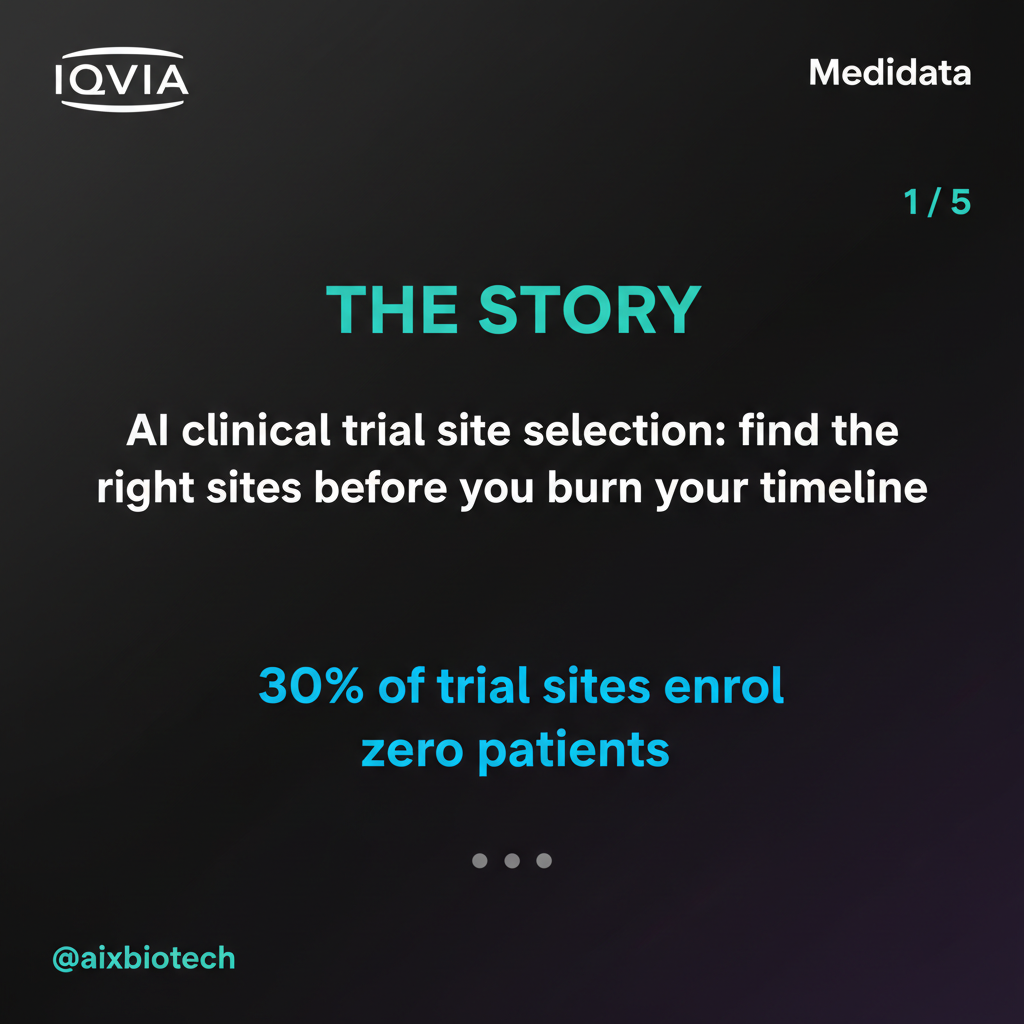
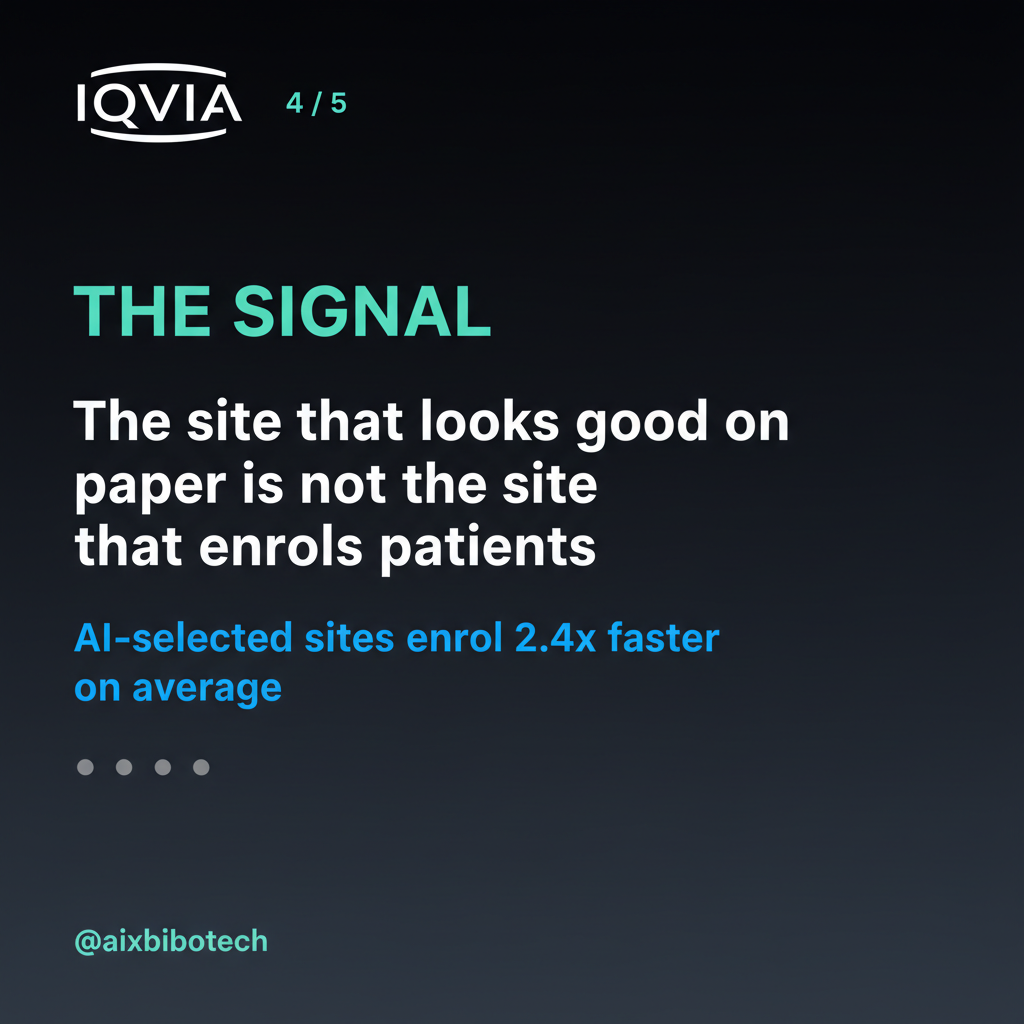
30% of clinical trial sites enrol zero patients. That statistic has not changed materially in two decades despite decades of site selection process improvement. The fundamental problem is that traditional site selection is relationship-driven and backward-looking. AI is changing both of those constraints.
Why traditional site selection underperforms
Traditional site selection relies on four inputs: investigator relationships maintained by the sponsor or CRO, historical site performance data from previous trials, therapeutic area expertise within the clinical operations team, and competitive landscape intelligence gathered from trial registries.
Each of these inputs has structural limitations. Investigator relationships are concentrated in sites that have historically been active — which creates a self-reinforcing cycle where the same overloaded sites are selected cycle after cycle while high-potential new sites remain invisible. Historical performance data is backward-looking and does not account for recent changes in site capacity, competing trial load, or patient population dynamics.
What AI site selection does differently
AI site selection tools pull together clinical trial registry data, site performance histories across multiple prior trials, investigator publication records, patient population databases, real-world evidence on local disease prevalence, and competing trial activity data. They generate a predictive enrolment score per site for a specific protocol in a specific geography.
The predictive score incorporates current capacity signals — how many other trials is this site currently running in this indication? Has the principal investigator changed recently? Has the site’s enrolment rate been trending up or down across the last three trials they participated in?
Key stat: A Phase III trial that misses its enrolment timeline by six months costs an average of $8 million in direct costs alone. Source: IQVIA Institute, The Changing Landscape of Clinical Trial Complexity, 2025.
Tools being deployed at scale
IQVIA Site Intelligence is the most widely deployed AI site selection platform in the industry. It integrates with IQVIA’s proprietary real-world data assets, including patient-level longitudinal data, to generate site-level patient population estimates. Roche and Pfizer both use AI-powered site scoring within their standard feasibility process.
Medidata’s AI-assisted feasibility tools are widely used at mid-size biotech companies and CROs. They are particularly strong for oncology and rare disease trials where patient concentration by site is highly variable.
How to integrate AI into your site selection process
- Use AI for the long list, not the short list. AI site selection is most valuable in generating and ranking the long list of potential sites. Short list decisions still benefit from human judgment about site relationships, investigator quality, and operational considerations.
- Build in competing trial monitoring. Site capacity can change rapidly. A site that scores highly in feasibility may have activated a competing trial between your feasibility assessment and your site contracting.
- Use AI to identify non-traditional sites. The highest-value use of AI site selection is identifying high-potential sites that are not on your existing relationship network.
- Connect site selection data to your performance monitoring. The AI score at site selection should be compared to actual site performance during the trial. This feedback loop improves the model over time.
Our analysis of AI patient recruitment optimisation covers the downstream challenge. Site selection and patient recruitment are two phases of the same problem and benefit from being planned with a connected data architecture.
FAQ
Does AI site selection work for rare disease trials with very limited site pools?
Yes, but differently. In rare disease, the site pool is inherently small. AI adds value by identifying which sites within the limited pool are most likely to achieve their enrolment targets based on current patient population data and competing trial load.
How do you validate an AI site selection recommendation?
Cross-reference the AI score against your team’s site relationship knowledge and any recent intelligence from your CRO. AI site selection is a starting point for due diligence, not a replacement for it.
What data does the AI model need to generate a reliable site score?
At minimum: historical trial participation records, enrolment rate data from prior trials, patient population estimates for the target indication, and current competing trial activity.
AI site selection does not eliminate enrolment risk. It reduces the probability of picking the wrong site from the outset. Given the cost of a six-month enrolment delay, that probability reduction has a large financial value.
Based on publicly available information. This analysis covers non-proprietary, publicly disclosed data only.