
Neurocrine acquires Soleno for $2.9B: what the deal signals about the 2026 M&A wave
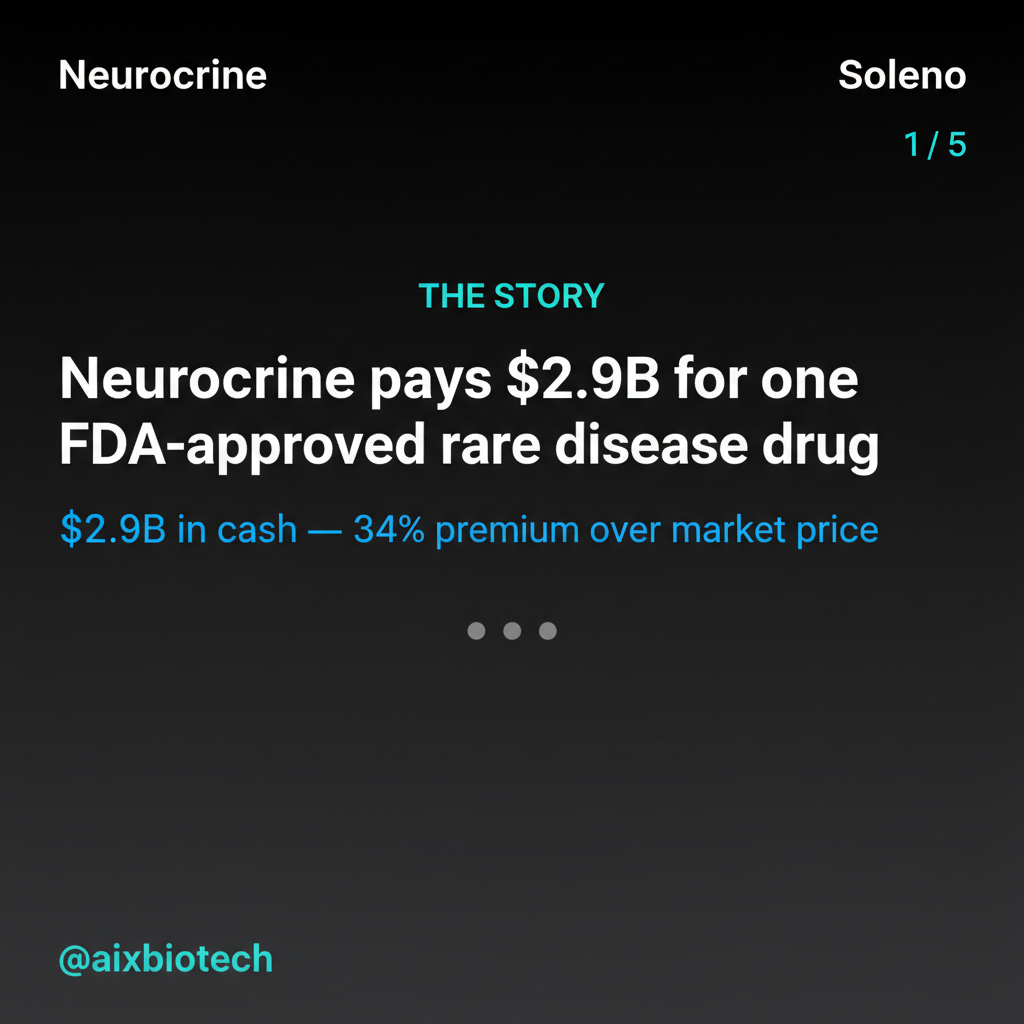
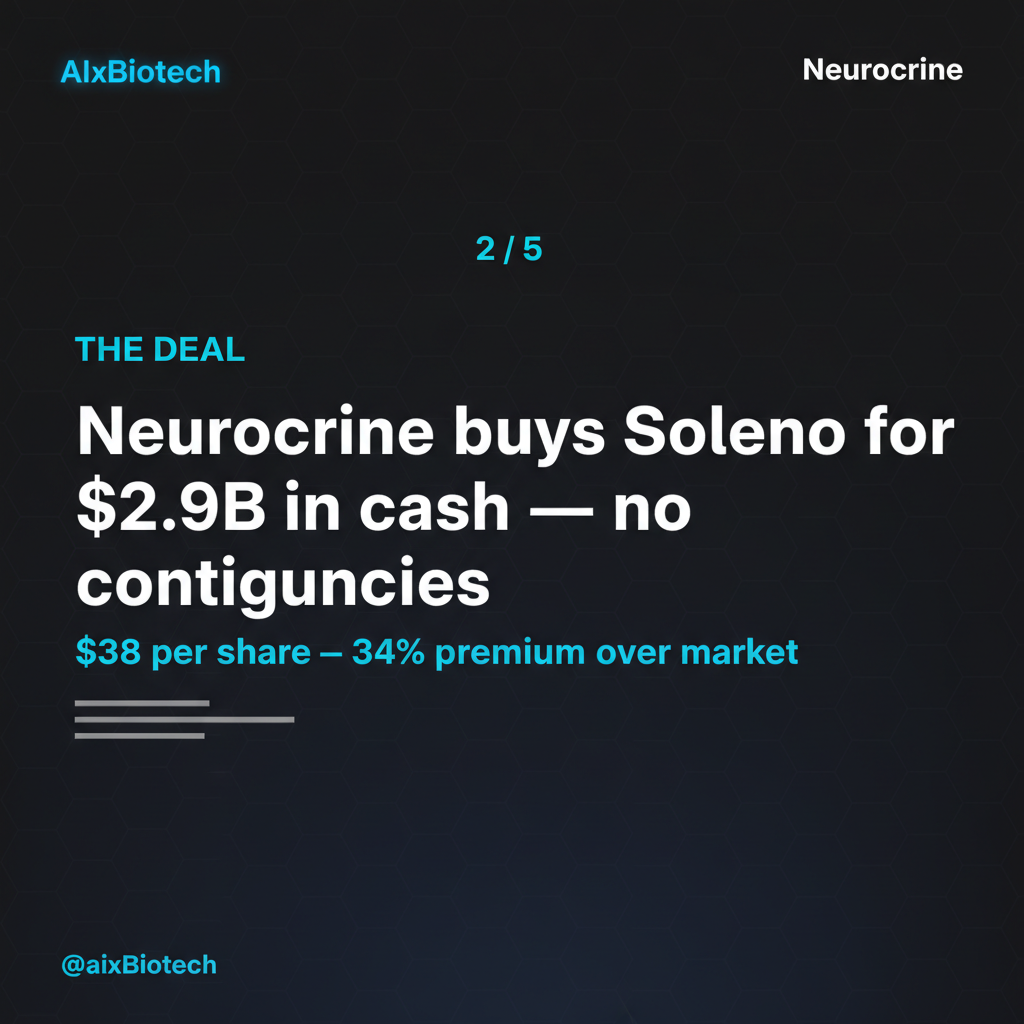
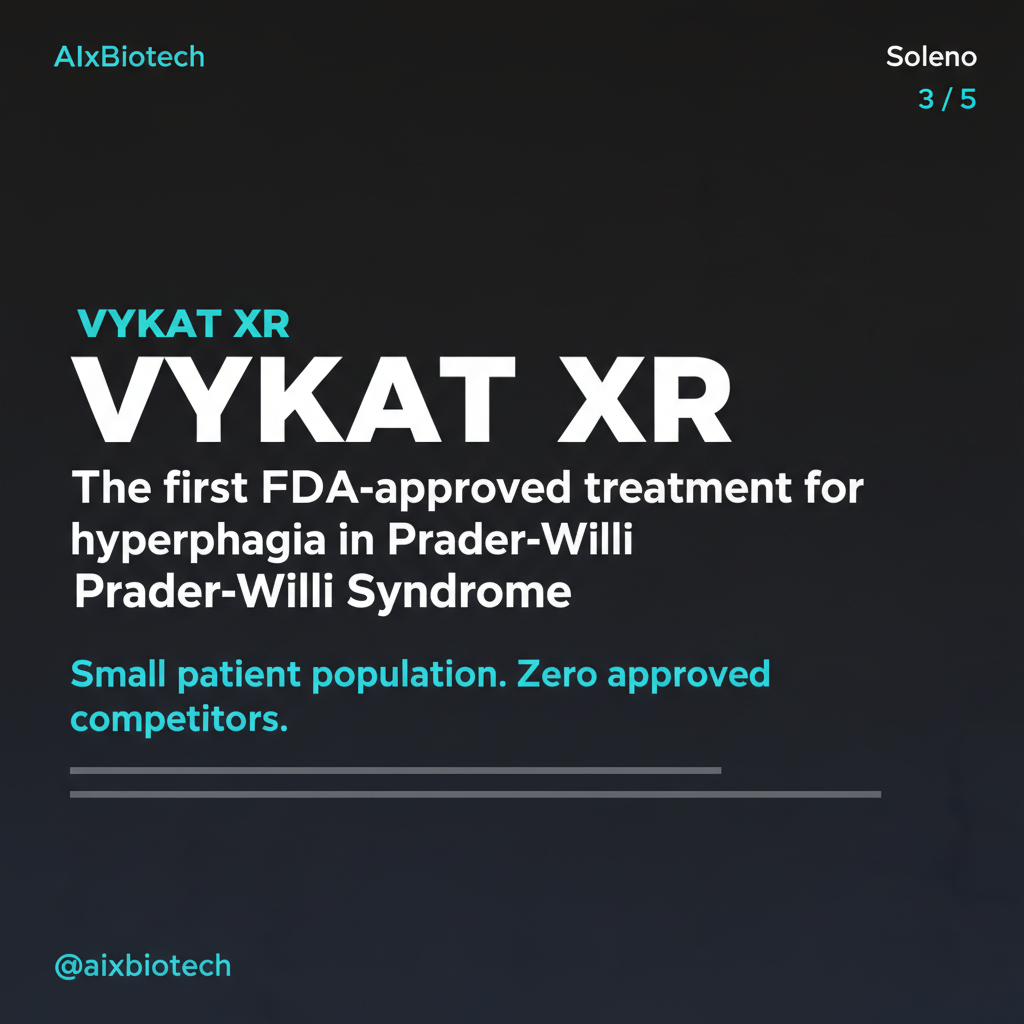
Neurocrine Biosciences has agreed to acquire Soleno Therapeutics for $2.9 billion in cash. The deal is Neurocrine’s largest acquisition ever and adds Vykat XR (diazoxide choline), the first and only FDA-approved treatment for hyperphagia in Prader-Willi Syndrome, to its rare disease and endocrinology portfolio.
Soleno shares surged more than 32% at announcement. Neurocrine described Vykat XR as a “blockbuster in the making.”
What Neurocrine is paying for
Prader-Willi Syndrome is a rare genetic disorder characterised by chronic hunger that cannot be satisfied. Hyperphagia in Prader-Willi patients is severe, persistent, and creates significant caregiver burden and medical risk. Until Vykat XR, there was no approved pharmacological treatment for this symptom specifically.
First-mover advantage in a rare disease indication with no approved competitors is one of the most defensible commercial positions in biotech. Neurocrine is paying a 34% premium over Soleno’s pre-announcement share price for that position. In cash.
The deal is structured with certainty. No milestone-based contingent value rights. No earnout tied to sales targets. $2.9 billion in cash is the clearest signal possible that Neurocrine views Vykat XR’s commercial trajectory as sufficiently predictable to pay upfront.
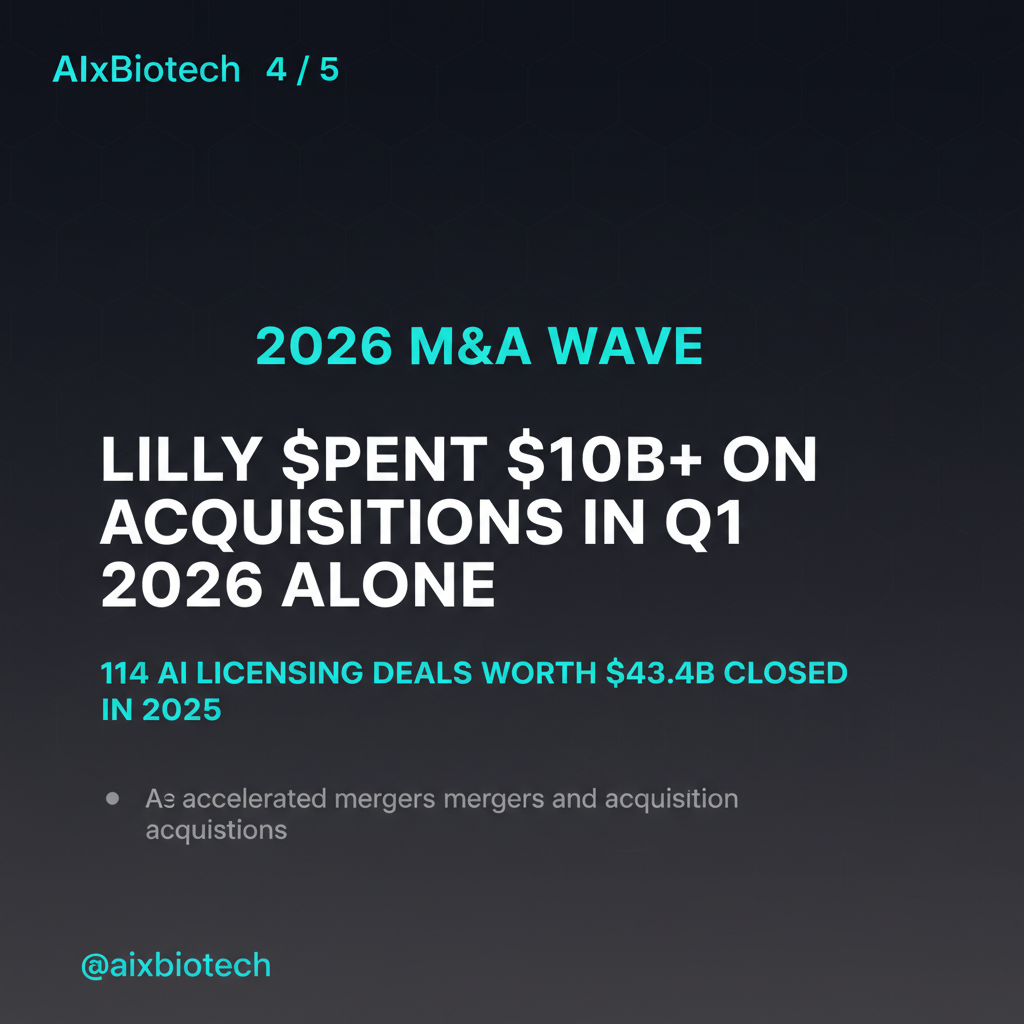
Key signal: Pharma and biotech M&A in Q1 2026 has accelerated significantly year on year. Eli Lilly alone has committed over $10 billion in acquisitions in the first quarter: up to $7.8 billion for Centessa Pharmaceuticals and up to $2.4 billion for Orna Therapeutics. Source: publicly disclosed deal announcements, April 2026.
The 2026 M&A pattern: buying certainty, not potential
The Neurocrine-Soleno deal fits a consistent pattern that has defined Q1 2026 M&A activity. Large pharma and specialty biotech acquirers are paying premium valuations for assets that are already approved, already generating revenue, and already in a defensible market position. They are not paying premiums for Phase II results or promising mechanism of action stories.
Eli Lilly’s acquisition of Centessa targets OX2R agonists with Phase II results in narcolepsy. Lilly’s acquisition of Orna Therapeutics targets circular RNA technology with in vivo CAR-T potential. These are more speculative. But the valuation methodology differs: Centessa includes contingent value rights, Orna includes milestone payments. The risk-sharing structures reflect the earlier-stage nature of those assets.
Neurocrine paid cash, no contingencies, for an approved product. The pricing signal is clear.
What this means for biotech BD and commercial teams
The current M&A environment has specific implications for biotech companies at different pipeline stages.
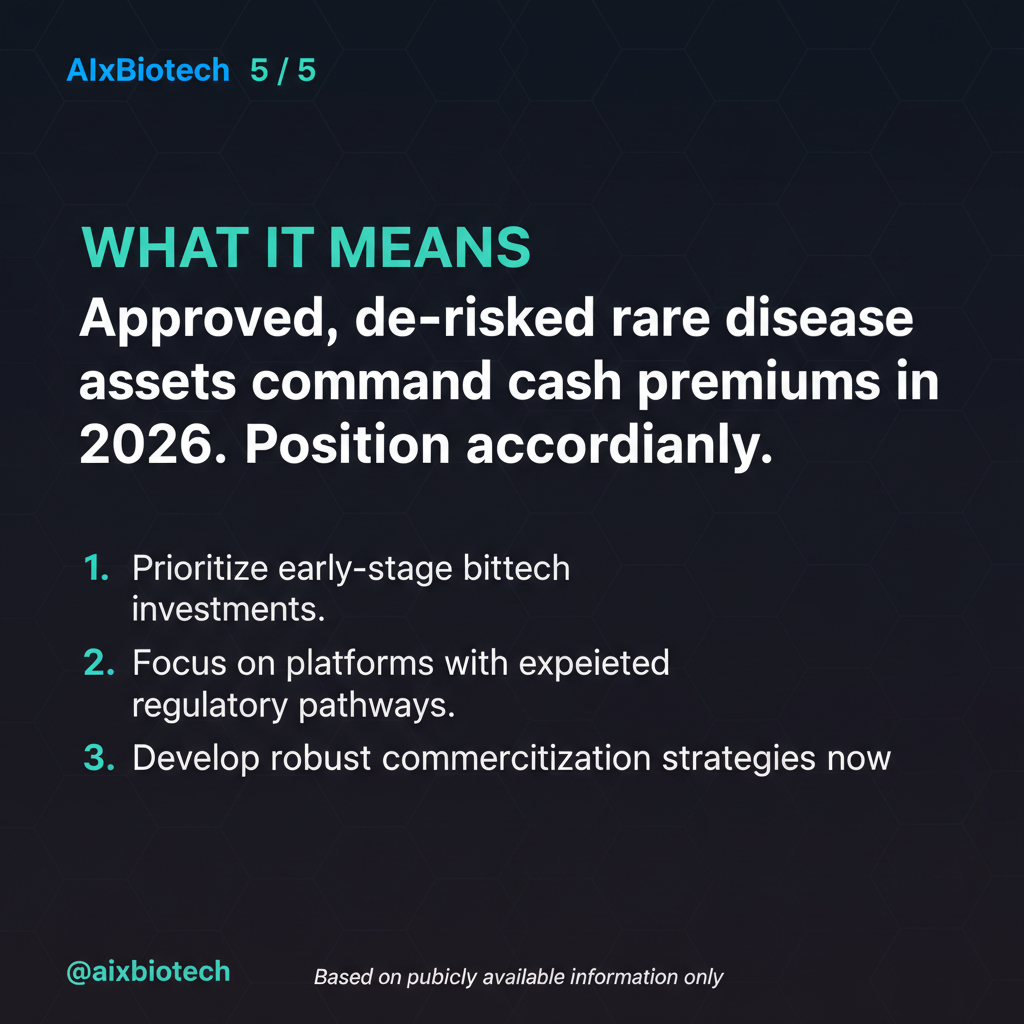
For companies with approved or near-approval assets: valuations are at a premium right now. Acquirers are actively looking for de-risked assets and are willing to pay cash for certainty. If you have an approved product with a clean commercial trajectory in a specialty or rare disease indication, this is a structurally favourable environment to explore strategic options.
For companies with Phase II or earlier assets: the deal terms are more complex. Milestone structures, CVRs, and earnouts reflect the risk acquirers are unwilling to price in upfront. This is not a bad environment for earlier-stage partnerships, but the structure of deals will require careful negotiation. AI deal modelling tools are particularly useful here for stress-testing milestone structures against variable development scenarios.
For commercial operations teams: an acquisition changes the commercial infrastructure rapidly. Neurocrine is absorbing Soleno’s commercial team and distribution network. For the Vykat XR sales force, the next 90 days will involve system migrations, process changes, and sales target resets. AI-powered commercial operations tools that can absorb and normalise data from two different CRM and distribution systems are directly relevant to managing this transition.
Our earlier analysis of AI biotech valuation modelling covers how AI tools are changing the way BD teams model deal value. The Neurocrine-Soleno deal is a good case study in why a static rNPV model misses the premium that first-mover rare disease positioning commands.
FAQ
Why is Neurocrine paying cash with no contingencies?
Vykat XR is already approved and generating revenue. The commercial risk is lower than for a pipeline asset. Cash with no contingencies reflects Neurocrine’s confidence in the commercial trajectory and avoids the complexity of milestone negotiations.
What does this deal mean for Prader-Willi Syndrome patients?
Neurocrine has a larger commercial infrastructure than Soleno. The acquisition should improve market access and patient support programme coverage for Vykat XR over time.
Is this the start of a sustained M&A wave in 2026?
Based on Q1 activity, the conditions for continued M&A are present: large pharma has strong balance sheets, patent cliffs are approaching for several major products, and interest rates have stabilised. Most industry analysts expect M&A activity to remain elevated through 2026.
How does AI factor into rare disease M&A?
AI is being used in rare disease deal origination to identify assets with orphan drug potential earlier in development. It is also being used in post-acquisition integration planning to model commercial synergies. Both applications are generating measurable value in the current deal environment.
The message from Q1 2026 M&A is consistent: de-risked assets with clear commercial trajectories are commanding premium valuations. That signal should be shaping pipeline strategy and BD positioning now.
Based on publicly available information. This analysis covers non-proprietary, publicly disclosed data only.