
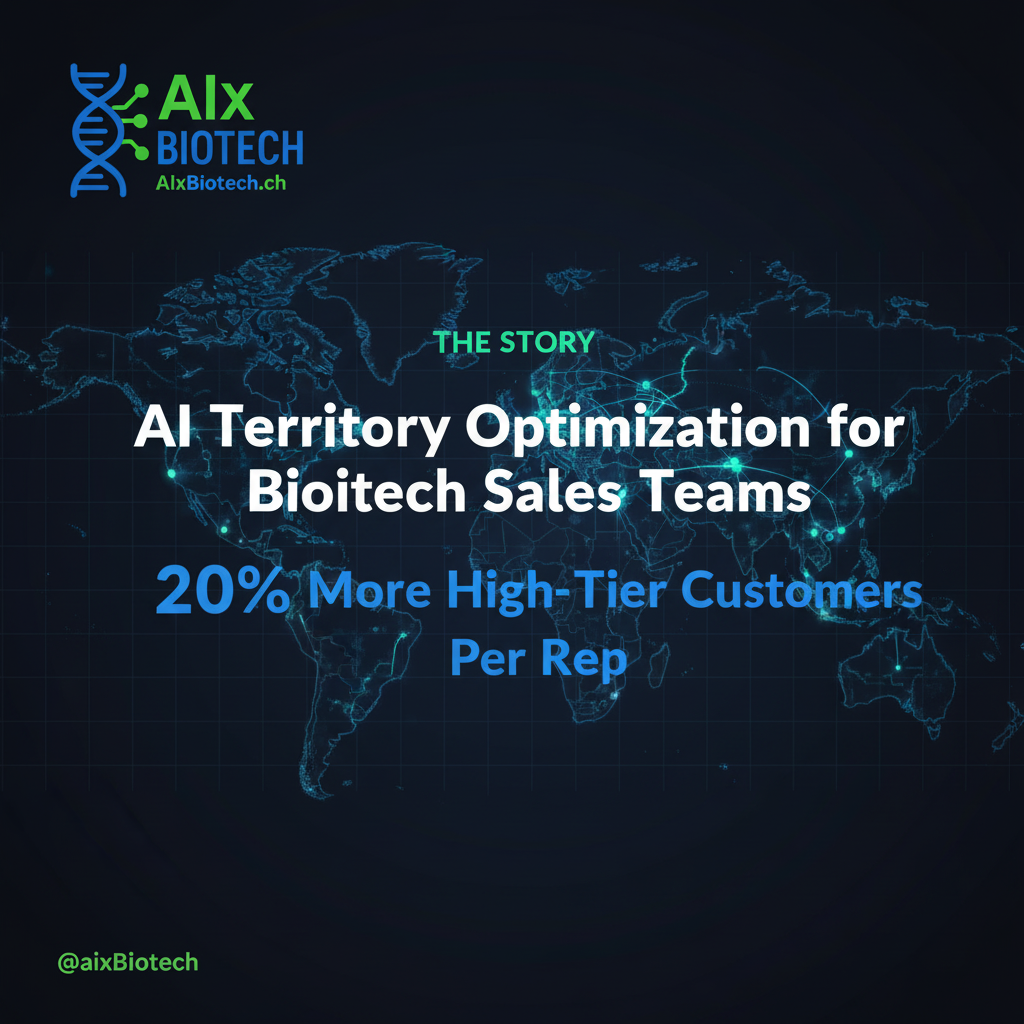
AI Territory Optimization for Biotech Sales Teams: From Static Maps to Dynamic Intelligence
AI territory optimization for biotech sales teams is one of the highest-ROI investments a commercial leader can make right now. Most biotech companies still design territories with static data, annual planning cycles, and spreadsheets built on sell-in history. In specialty pharma, that approach is costing you revenue every quarter.
The market has shifted. HCP access has dropped. Specialty drugs demand smarter deployment. And AI is already delivering results that static territory models cannot.
- 10% increase in sales force efficiency post-realignment
- Up to 20% more high-tier customers per territory
- ~18% increase in patient potential per territory
- Territory planning reduced from weeks to hours
AI Territory Optimization for Biotech: What Is Changing in 2025
The traditional territory design process in pharma has not changed much in twenty years. A commercial operations team pulls prescription data, overlays geography, assigns rep headcount, and calls it done. That model is reviewed once a year, maybe twice if a launch forces a realignment.
It does not work for specialty biotech. Here is why.
Specialty drugs serve small, concentrated patient populations. Prescribing is often driven by a handful of specialists within a region. One academic medical centre can represent 30% of a territory’s potential. A static model built on historical averages misses this concentration entirely.
AI territory optimization works differently. It ingests multiple data sources simultaneously: prescription flows, HCP specialty and subspecialty classifications, patient population data, payer coverage maps, historical rep performance, and even travel time between accounts. It then models territory potential dynamically, identifying where demand is building before it shows up in sell-in data.
According to the ZS Associates 2025 Biopharma Commercialization Report, more than 85% of biopharma executives plan to increase investment in data, AI, and digital tools. Territory optimization sits near the top of commercial priorities for mid-sized and large biotech companies.
Pharmaphorum’s 2026 commercialization outlook confirmed the shift directly: territory alignment that once required weeks of analysis now takes minutes with AI-powered tools. Multi-agent frameworks coordinate specialized models that monitor market conditions and recommend realignment in near real time.

Why AI Biotech Sales Territory Planning Matters for Commercial Leaders
The financial case is straightforward. A miscalibrated territory costs you in three ways.
First, rep time. If a rep’s territory is too large or poorly shaped, they spend more time travelling and less time in front of the right HCPs. According to PharmExec’s 2025 analysis, more than 20% of physicians now restrict access to sales representatives, and nearly 90% of interactions last less than two minutes. Every visit that does not convert is a sunk cost.
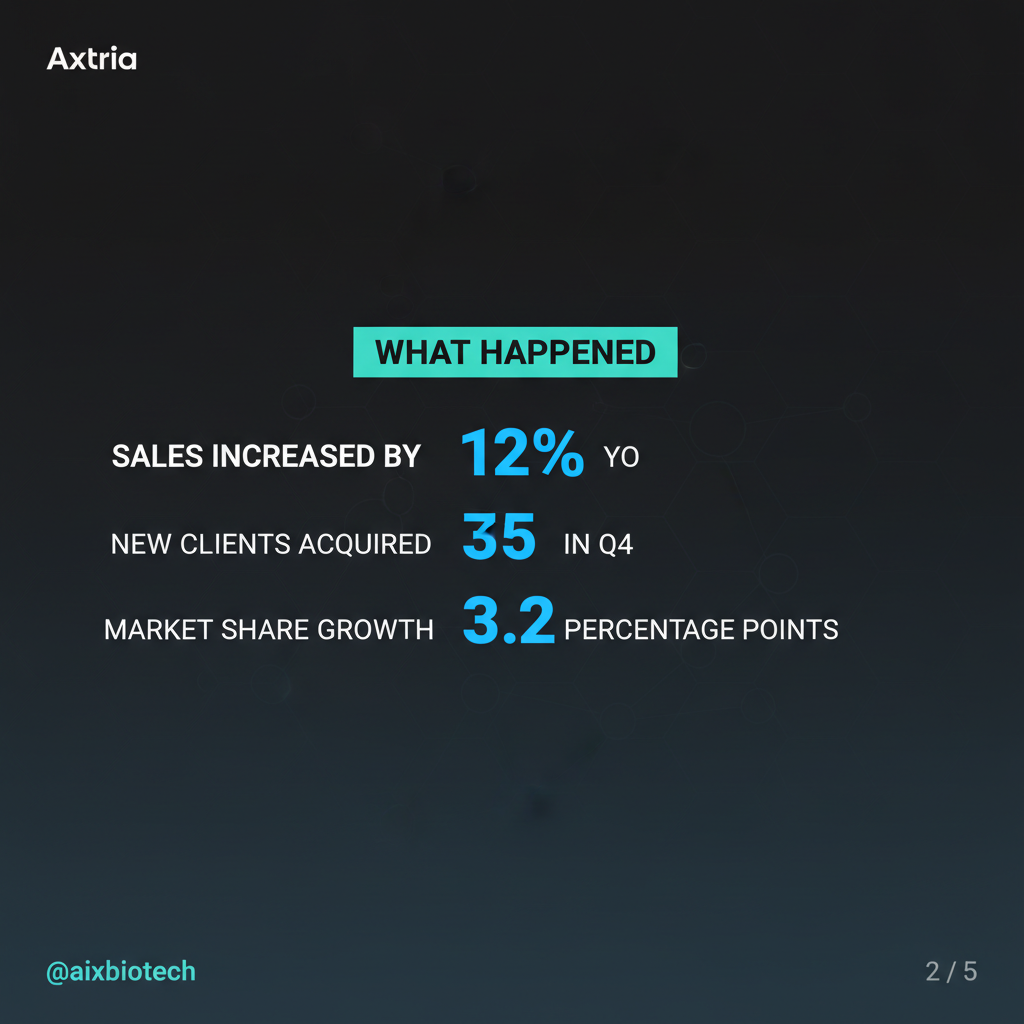
Second, opportunity concentration. In rare disease and specialty biotech, the difference between a high-potential and a low-potential HCP is enormous. Axtria’s documented case with a global rare disease company showed that effective AI-driven territory realignment increased high-tier customers per territory by up to 20% and patient potential per territory by approximately 18%. Those numbers move the revenue line.
Third, launch performance. A ZS Associates analysis found that companies investing in proven commercial AI areas, including territory optimization, are seeing three to four times ROI compared to companies that do not. For a product launch, that gap is the difference between a strong ramp and a missed first-year target.
The BCG survey referenced by Axtria confirmed that face-to-face engagement remains the most effective channel for driving pharmaceutical sales. Hybrid approaches combining in-person visits with non-personal promotion outperform either channel alone. But neither works if the territory design does not put reps in front of the right accounts.
Top AI Use Cases in Biotech Sales Territory Optimization With Immediate ROI
The strongest documented applications fall into four categories.
Dynamic territory alignment. Traditional territory design is static. AI-powered alignment is continuous. Axtria’s SalesIQ platform enables territory realignment using both traditional metrics (prescription volume, geography) and non-traditional inputs (patient flow, payer access, competitive activity). A global rare disease biotech used this approach to achieve 10% efficiency gains post-realignment, with 20% more high-tier accounts per rep territory.
HCP segmentation and targeting. AI builds dynamic HCP profiles by combining prescribing history, specialty classification, patient population data, conference activity, and digital engagement behavior. This produces a targeting model that updates continuously rather than sitting static until the next planning cycle. The result is better timing of rep engagement and reduced time spent on low-value interactions.
Next-best-action recommendations. IQVIA’s Field Force Agent, launched in 2025, is an AI-powered assistant designed to support the full field team including sales reps, key account managers, and medical science liaisons. It provides real-time guidance on which accounts to prioritize, which channel to use, and what message to lead with. This shifts the model from activity-based selling to insight-driven engagement.
Territory performance forecasting. AI models predict which territories are likely to underperform before the data confirms it. This gives commercial ops teams a forward signal to realign resources, adjust call plans, or redirect field force investment before a quarter is lost.

The Three Reasons Biotech Territory Design Fails Without AI
Understanding the failure modes of traditional models helps frame what AI actually fixes.
- Static data in a dynamic market. Territory plans built annually on historical sell-in data cannot capture mid-year formulary changes, new specialist centres, or shifts in patient referral patterns. By the time the plan reflects reality, the market has moved again.
- Geography-first, patient-second. Traditional alignment tools optimize for travel efficiency and geographic balance. They do not weight territories by patient concentration, prescriber influence, or payer access. In specialty biotech, this is a critical design error.
- No forward signal. Static models tell you what happened. AI models tell you what is building. For specialty drugs where ramp timing is everything, a 90-day forward view on territory demand is the difference between a proactive deployment decision and a reactive one.
Where AI Pharma Territory Optimization Works on Non-Regulated Data
The data inputs for AI territory optimization are almost entirely commercial and non-regulated. This is important. You do not need clinical validation infrastructure to get started.
- Prescription data. IQVIA and Symphony Health provide anonymized, aggregated prescribing data at the HCP and account level. This is the foundation of any AI territory model.
- HCP specialty and patient population data. Publicly available and commercially licensed datasets allow AI models to score HCPs by specialty, patient load, and treatment pattern.
- Payer and formulary coverage maps. AI overlays formulary access data to identify where rep investment is likely to convert versus where access barriers make the visit low value.
- CRM and field activity data. Veeva CRM data feeds AI models with rep interaction history, call outcomes, and HCP responsiveness signals. This creates a feedback loop that improves targeting over time.
- Geographic and travel data. Route optimization and travel time analysis improve territory shape and reduce non-selling time.
These data sources are non-regulated, commercially available, and do not require compliance validation to use in AI models. Always confirm with your IT and legal teams before connecting any internal CRM or patient services data to an AI platform, particularly if it touches any personally identifiable or patient-level information.

The Platforms Leading AI Territory Optimization in Biotech
Axtria SalesIQ is one of the most widely deployed platforms for AI-powered territory alignment and field force optimization in life sciences. Their documented case studies in rare disease and specialty pharma show consistent efficiency and productivity gains.
ZS Associates ZAIDYN combines data analytics with commercial consulting and AI-driven territory planning. ZS was named a Leader in the 2025 Everest Group PEAK Matrix for life sciences AI and analytics. Their 2025 biopharma commercialization report is one of the most cited sources on commercial AI ROI.
IQVIA Field Force Agent is a newer entrant, launched in 2025, designed to give field teams real-time AI guidance across territory prioritization, channel selection, and account planning. It integrates with IQVIA’s data assets for a combined analytics and action layer.
Veeva CRM with AI integration provides the data foundation for dynamic targeting and next-best-action models. The long-term IQVIA and Veeva partnership confirmed in August 2025 signals deeper integration between field data and commercial AI going forward.
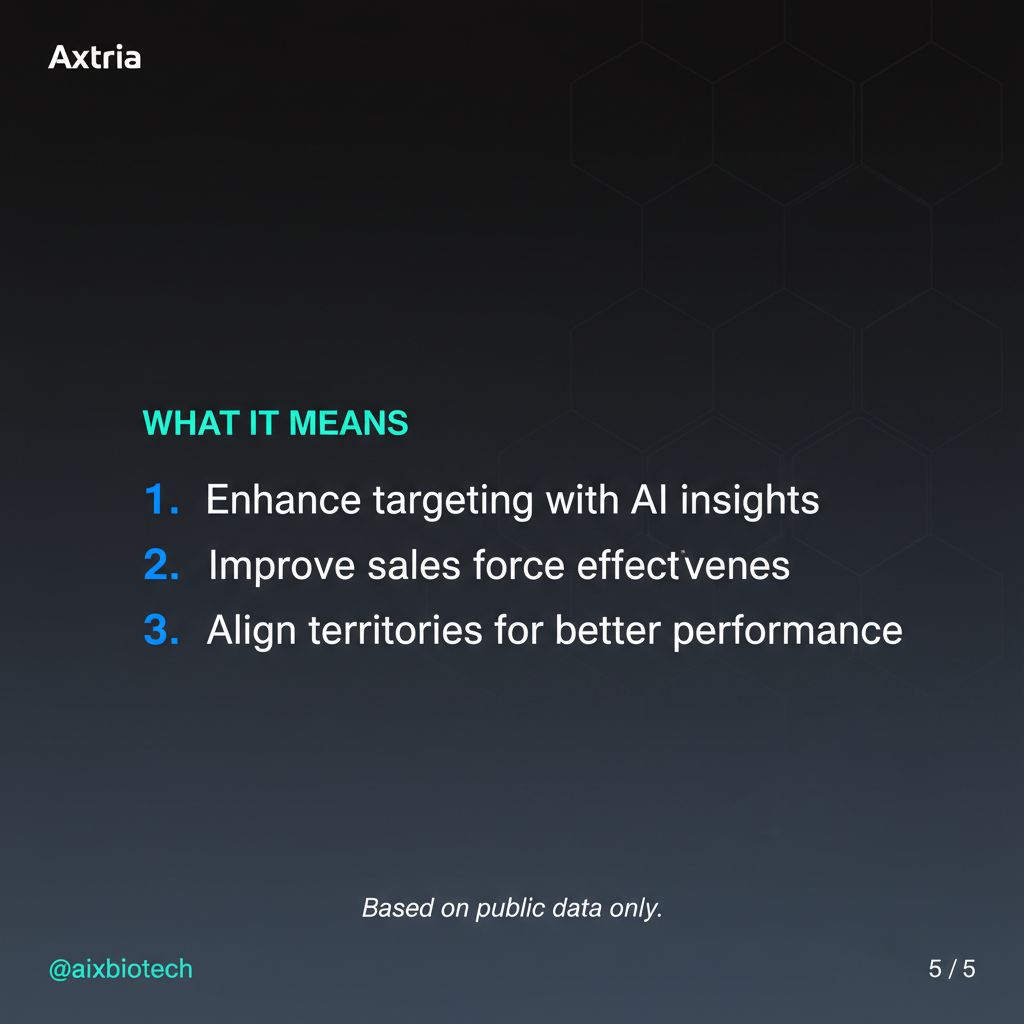
How to Implement AI Territory Optimization for Biotech Sales Teams
Most commercial operations teams have more data than they are using. The starting point is alignment, not technology.
- Audit your current territory design inputs — what data are you actually using?
- Identify your highest-potential specialty product as the pilot
- Map the gap between current territory shape and patient concentration data
- Define a baseline efficiency metric before AI deployment
- Get IT and legal sign-off on data sources before connecting to any AI platform
- Set a 90-day review cycle to measure rep productivity and high-tier account coverage
The key mistake most commercial teams make is buying a platform before defining what problem they are solving. Territory optimization AI works best when you can answer two questions clearly: which accounts are currently under-served, and which reps are spending time on low-potential calls? If you cannot answer both questions with your current data, start there.
The Bottom Line
More than 20% of physicians restrict access to reps. Nearly 90% of calls last under two minutes. Static territory designs built on last year’s sell-in data are not going to close that gap.
AI territory optimization is not a technology project. It is a commercial strategy decision. The companies that realign their territories dynamically, weight deployment against patient concentration, and give reps forward-looking account intelligence are the ones building durable market share advantages in specialty biotech.
The tools are ready. The data is available. The planning cycles that used to take weeks now take hours.
Want more on building high-performance commercial operations in biotech? Read our analysis on AI in specialty drug demand forecasting and how AI is closing the distributor margin gap in biotech.
FAQ: AI Territory Optimization for Biotech Sales Teams
What is AI territory optimization in biotech sales?
AI territory optimization uses machine learning to design and continuously update sales territories based on real-time data: prescription flows, HCP specialty classifications, patient population concentrations, payer coverage maps, and rep performance history. It replaces static annual planning with dynamic, data-driven territory design.
How much can AI improve sales force productivity in biotech?
Documented results from Axtria’s work with a global rare disease company show a 10% increase in sales force efficiency post-realignment, with up to 20% more high-tier customers per territory and approximately 18% more patient potential per territory. ZS Associates reports companies using AI in commercial operations are seeing three to four times ROI versus those that do not.
What data does AI territory optimization use?
The primary inputs are prescription data (IQVIA, Symphony Health), HCP specialty and patient population data, payer and formulary coverage maps, CRM interaction history (Veeva), and geographic travel data. These are all commercially available, non-regulated data sources that do not require clinical compliance validation.
Is AI territory planning regulated in pharma?
AI tools used on commercial and market data are not subject to GxP or 21 CFR Part 11 regulation. However, if your territory optimization model connects to any patient-level data, personally identifiable information, or internal clinical records, you must get IT and legal sign-off before deployment. Always draw a clear line between commercial data and regulated data in your AI architecture.
Which platforms offer AI territory optimization for biotech sales teams?
The leading platforms are Axtria SalesIQ (territory alignment and field force optimization), ZS Associates ZAIDYN (commercial analytics and AI planning), IQVIA Field Force Agent (real-time field guidance), and Veeva CRM with AI integration. Each has documented life sciences use cases with measurable outcomes.
Territory optimisation is one piece of a broader commercial intelligence picture. The same AI platforms driving smarter territory design are also reshaping demand forecasting and distributor margin management. See how AI is cutting supply chain costs across biotech and how AI is closing the $356 billion distributor margin gap in biotech for how these capabilities connect across the commercial function.