
AI key account management in biotech: from relationship tracking to revenue intelligence
Most biotech key account management runs on structured relationships and manual updates. Account plans are written once a quarter. CRM entries are filed after the call. Insights arrive weeks after the conversation.
AI changes this. Not by replacing the account manager, but by giving them a real-time intelligence layer that most competitors do not yet have. Teams using AI-powered KAM tools are identifying at-risk accounts earlier, personalising outreach with data, and shortening the time from insight to action.
What AI actually does in key account management
In biotech KAM, AI operates across three layers: data aggregation, pattern recognition, and action recommendation.
Data aggregation pulls together CRM records, claims data, formulary status, prescribing trends, publication activity, and call notes into a single account profile. Without AI, this synthesis takes hours per account per cycle. With AI, it is continuous and automatic.
Pattern recognition surfaces signals that a human would miss across hundreds of accounts simultaneously. A prescriber who attended three advisory boards but has not increased volume. A hospital account where access declined after a formulary review. An account where competitor rep frequency increased by 40% in the last 30 days.
Action recommendation translates those signals into specific next steps for the account manager. Not generic guidance. Specific: call this stakeholder, bring this data, address this objection.
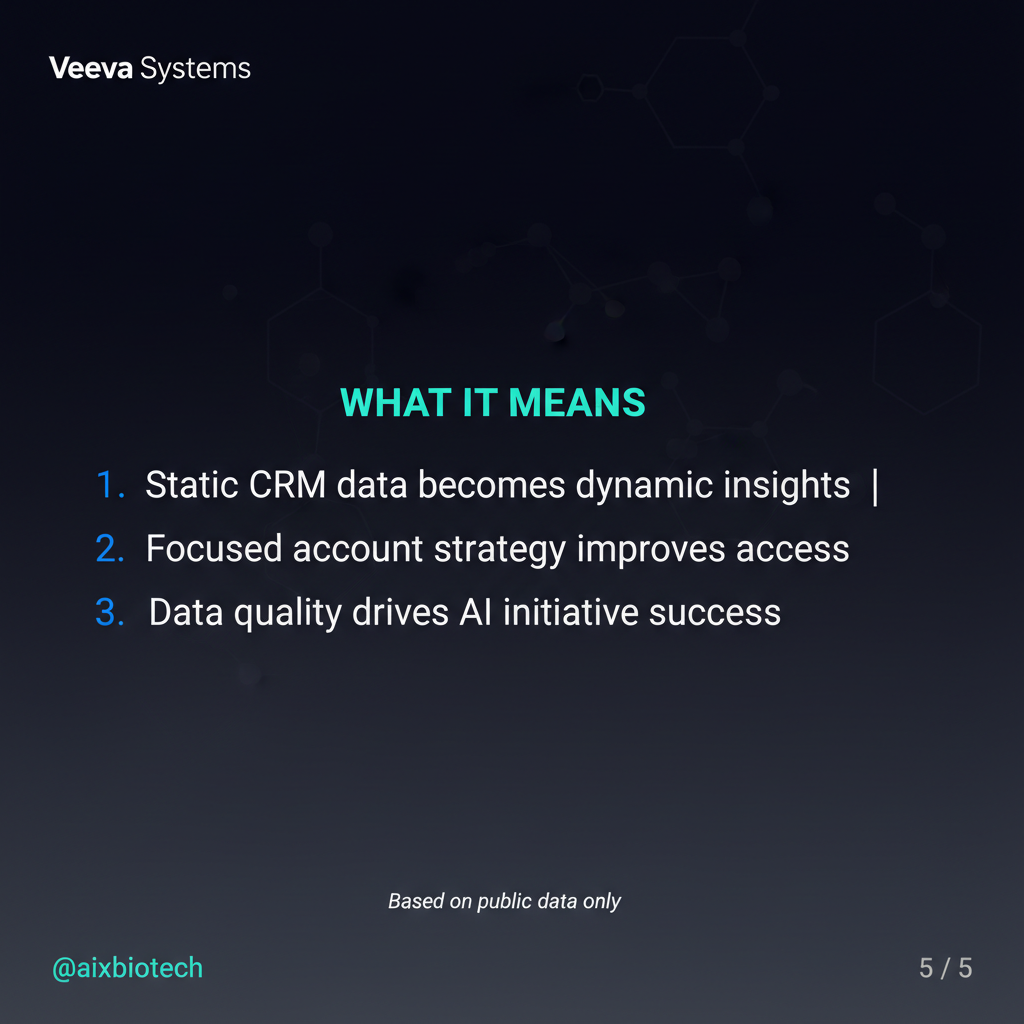
Key stat: 89% of biopharma AI commercial initiatives fail to scale. The main reason is poor data foundation, not poor technology. Source: Veeva Systems, State of Data and AI in Commercial Biopharma, 2025.
Tools biotech KAM teams are using in 2025
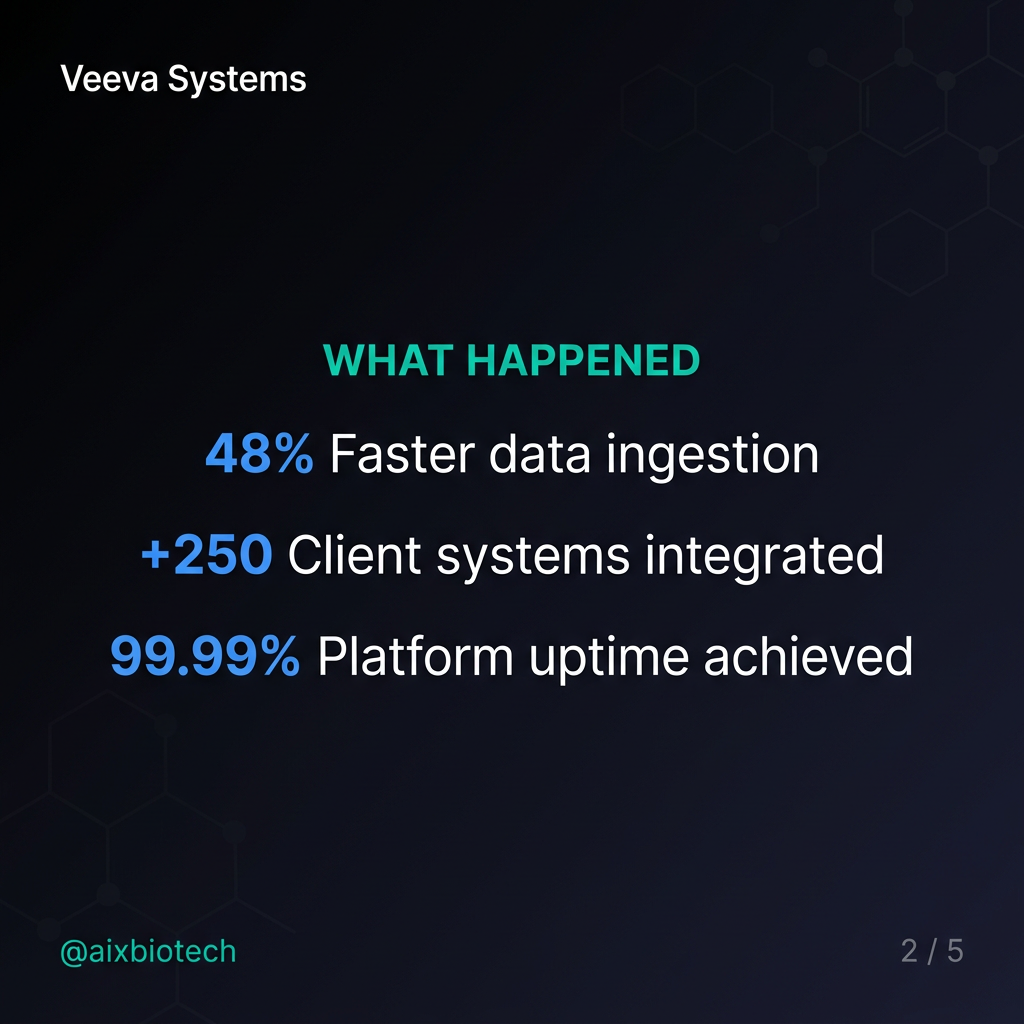
Veeva CRM is the dominant platform in biotech commercial operations. In 2025, Veeva ended its long-standing Salesforce partnership and accelerated its own AI roadmap. Veeva Vault CRM now includes AI-driven next best action, automated call note summarisation, and account health scoring.
Salesforce Life Sciences Cloud is the alternative for teams already on the Salesforce ecosystem. The Agentforce product, launched in 2025, brings AI agents directly into the CRM workflow. Account managers can ask natural language questions about account performance and receive structured recommendations without leaving the platform.
Axtria CustomerIQ is gaining traction at mid-size biotech commercial teams. It sits on top of existing CRM data and adds AI-driven account segmentation, targeting scores, and launch readiness monitoring. It does not require a full CRM replacement.
A practical example: launch readiness monitoring
A mid-size biotech launching a specialty oncology product in Germany, France, and the UK used AI-powered account scoring to prioritise the 200 accounts most likely to drive early adoption. The AI model pulled together prescribing history, guideline involvement, institutional formulary processes, and payer coverage status.
The output was a ranked account list with specific access barriers flagged per account. The commercial team focused their first 90 days on the top 50 accounts and achieved 68% formulary access in those accounts within the launch quarter. Without AI prioritisation, the team would have spread effort equally across 500 accounts.
L.E.K. Consulting documented similar patterns across multiple EU5 biotech launches in 2025, noting that AI-driven account prioritisation consistently improved early revenue velocity.
How to deploy AI in KAM without compliance risk
- Start with your existing CRM data. Do not wait for a full data transformation. AI tools can work with imperfect data and improve output quality over time.
- Use AI on non-regulated data only. Prescribing data, claims data, call notes, and account plans are non-regulated commercial data. Patient-level data and clinical trial information require separate governance frameworks. GxP and 21 CFR Part 11 compliance must be maintained for any regulated activities.
- Keep the account manager in the loop. AI provides recommendations. The account manager approves actions. This is both a compliance requirement and a performance reality.
- Document the AI recommendation logic. Regulators in some markets are beginning to request documentation of AI-assisted promotional decisions. Build audit trails from day one.
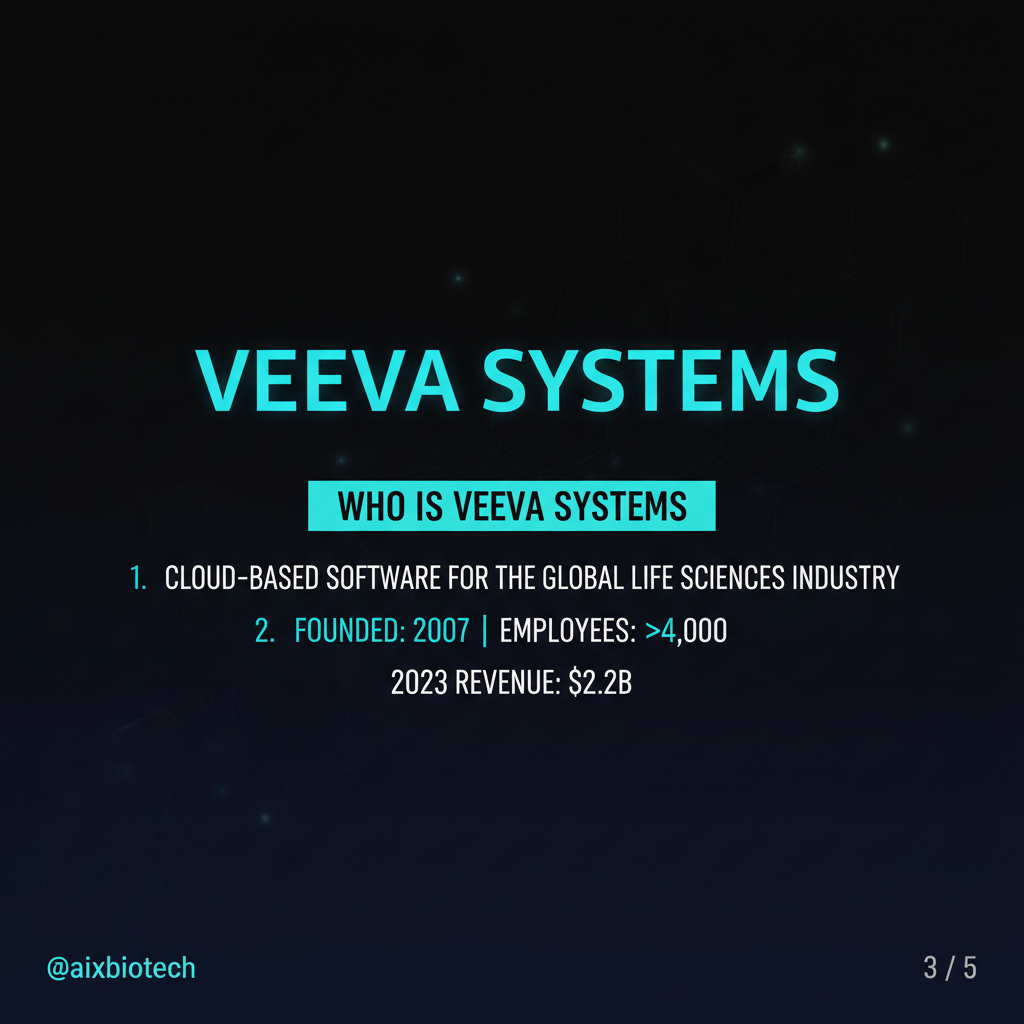
As we covered in our analysis of AI territory optimisation for biotech sales teams, the commercial teams gaining the most from AI are not the ones with the largest tech budgets. They are the ones that start with a clear business question and build data discipline around it.
FAQ
Does AI replace the key account manager?
No. AI handles data synthesis and pattern recognition. The account manager handles the relationship, the negotiation, and the clinical conversation. Teams that replace human judgment with AI recommendations without oversight consistently underperform.
What data does AI KAM need to function?
At minimum: CRM call records, account-level volume or prescribing data, and formulary or access status. AI tools can work with partial data but will flag gaps that need to be filled.
Is AI-assisted KAM compliant with GDPR and HIPAA?
Yes, if implemented correctly. AI KAM tools operate on aggregated, non-patient-level commercial data. Individual patient data must never enter a commercial AI system. Always validate with your compliance and legal teams before deployment.
How long does it take to see ROI from AI KAM?
Most commercial teams report measurable improvements in account plan quality and call effectiveness within one commercial cycle. Revenue impact is typically visible within two to three cycles, depending on the therapy area and market complexity.
AI does not make the account manager redundant. It makes the account manager faster, better prepared, and less likely to miss the signal that matters.
Based on publicly available information. This analysis covers non-proprietary, publicly disclosed data only.